
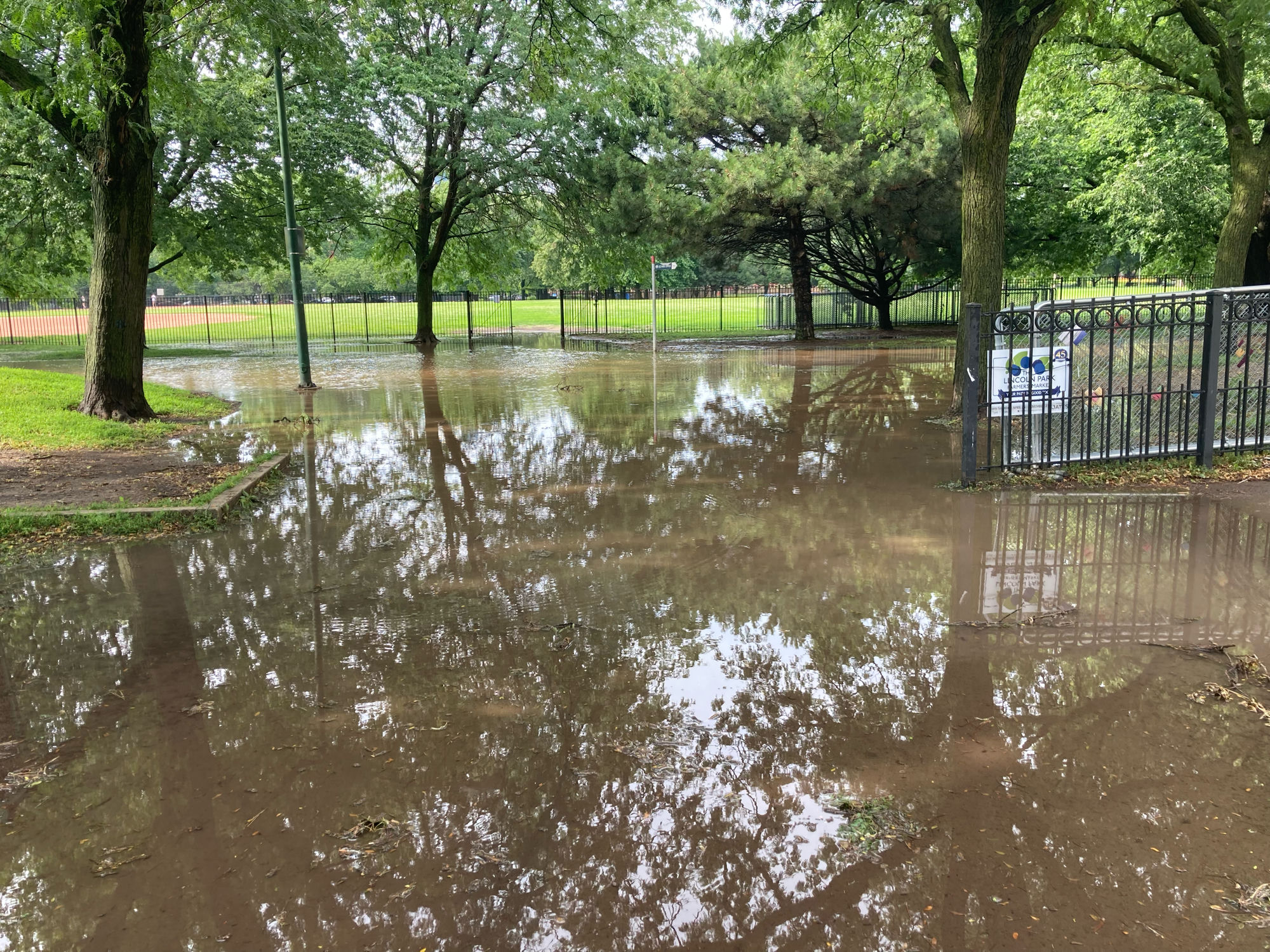
If you’ve ever driven up to your favorite market and found half the vendors missing, a chain-link fence where the entrance used to be, or nothing at all, there’s a story behind it. It’s not usually a story about someone dropping the ball. The market managers we work with take risks seriously, make hard calls fast, and do what they can to protect the people who show up to sell and shop. But no amount of good management stops a storm, clears wildfire smoke, or un-digs a hole the city put in the ground without asking. This year alone, Moody Teas has been on both sides of that reality: markets that called themselves off to keep people safe, markets we chose to skip ourselves, one that turned into an emergency mid-shift, and one that got dug up out from under it with no way to fix it in time. Here’s what actually happens when a farmers market is cancelled, and what it costs.
When the market cancels itself
Three times this year, a market we were scheduled to attend called off the day entirely, and every time it was the right call made with the information available at the time. Once for a storm. Once for air quality, when smoke from the Canadian wildfires pushed Chicago’s air quality index to 638, the worst reading in Cook County history and second-worst in the world that week, behind only Kinshasa. And once for a tornado warning, when Lincoln Square shut down mid-morning on August 11th as the National Weather Service issued the warning for the area. Market organizers aren’t guessing when they make that call. They’re watching real thresholds and choosing safety over a vendor’s bottom line, ours included, and we’d rather they close a market that turns out fine than run one that turns out dangerous. When that call comes down, we don’t get our vendor fee back either. More on that in a minute.
The hardest part to sit with is this: sometimes the forecast that justified the cancellation doesn’t hold up, the storm passes north of the city, the smoke clears out early, and the day turns out perfectly fine. It happens, and it’s frustrating every time. You can’t tell in advance which cancellations will look obviously correct by afternoon and which ones will look, in hindsight, like an overreaction to conditions that never fully materialized. We still think erring toward safety is the right process, even knowing some of those calls will age badly. The alternative is making the riskier bet and hoping you’re one of the times it pays off.
When we cancel ourselves
Four more times this year, the market ran, and we didn’t show. Once for extreme heat, when the heat index climbed toward 108°F during one of Chicago’s worst heat waves in years. Once for that same wildfire smoke, on a separate weekend when it returned. Once for a staffing gap we couldn’t cover safely. And once on August 11th, when Low Line’s afternoon slot came after that morning’s tornado warning had already passed, and we still decided the lingering storm risk to our staff and product wasn’t worth it on a day that was going to be that slow anyway.
Every one of those decisions cost us money we would have made if we’d just shown up. We set a real threshold in advance (a specific air quality number, a specific heat index) and checked the actual reading that morning, not the previous night’s forecast, because forecasts had been wrong all week during the smoke event. Then we made the call and lived with it. That’s the tradeoff nobody sees from the customer side: the safe choice and the profitable choice are frequently not the same choice, and we picked safety anyway.
Sometimes there’s no time to decide at all

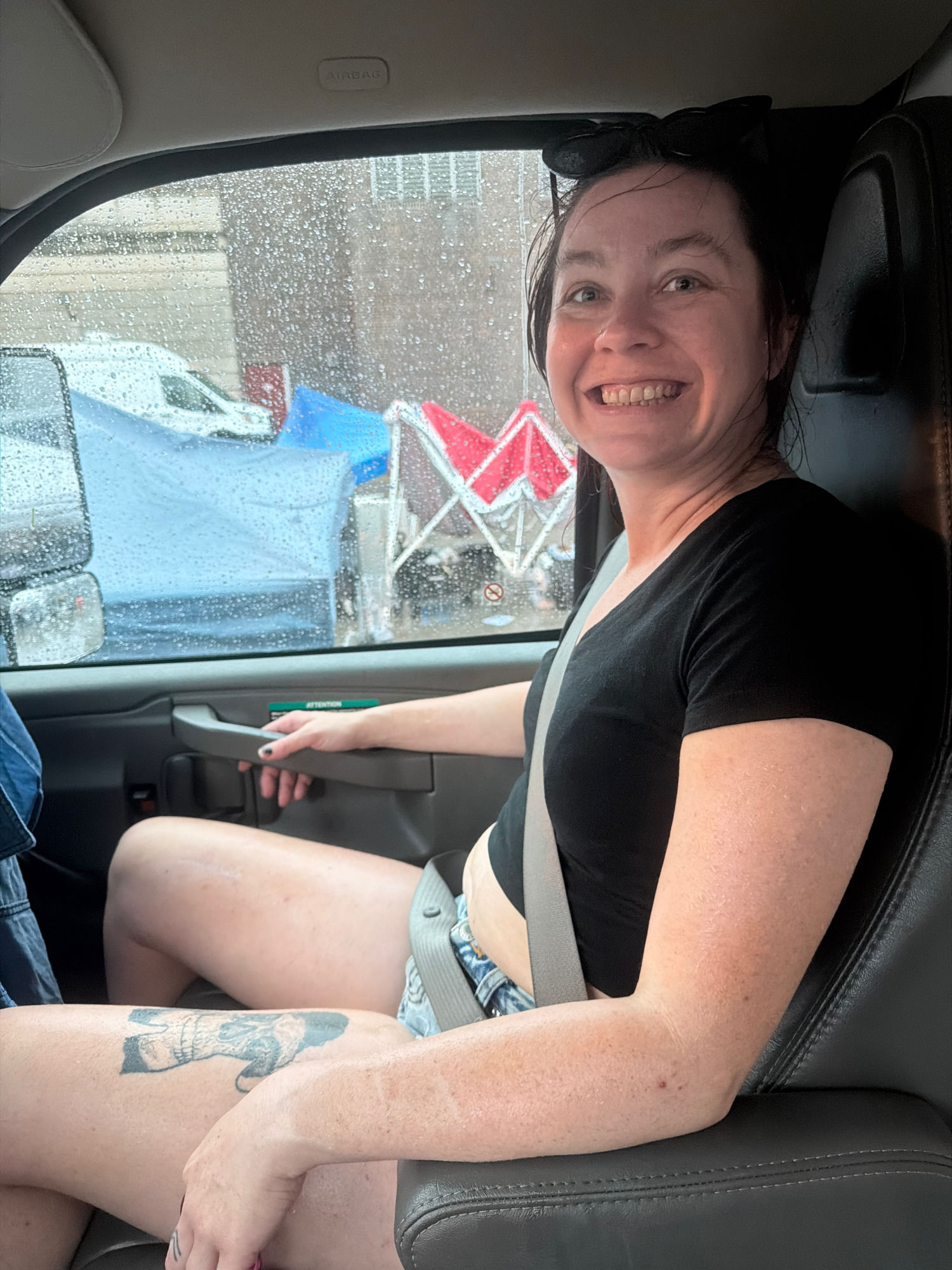
Not every disruption gives you a moment to think it through. One market day this year, a storm turned violent with almost no warning mid-shift, and there was no time for a phone call or a group decision. Our market manager Cat ended up physically holding the tent frame down against the wind while the rest of the team scrambled to get product and equipment into the truck before either got ruined. She made it out soaked to the skin, tent intact, product mostly saved. Nobody planned for that morning to end in an emergency pack-up. It just did, and someone had to hold on until it was over.
Staff get paid whether the market runs or not. Sometimes what that pay covers is holding a tent together in a storm with your bare hands, which is its own argument for hazard pay, not a feel-good story.
When nothing gets cancelled, and it still goes wrong
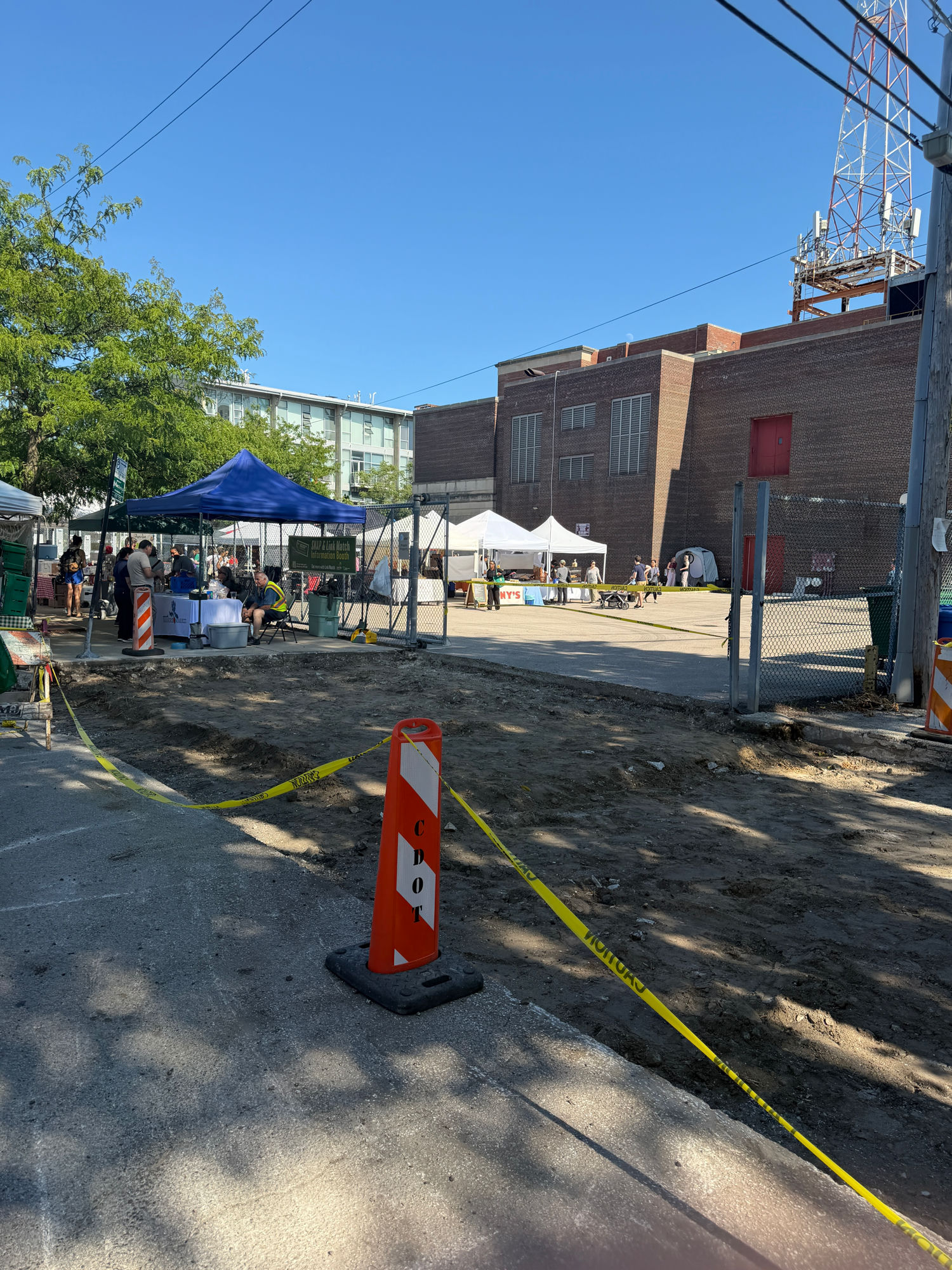
Sometimes the people running the market do everything right, and the day still falls apart. Roughly 36 to 48 hours before Andersonville’s July 22nd market, the Andersonville Sustainable Community Alliance spotted the problem: the city had torn up the ground right at the market’s main entrance. They spent the next day trying to track down who was actually responsible, some combination of CDOT and contractors, hoping to get it fixed before market day. They couldn’t pin it down in time. Rather than sit on that, they told vendors as soon as they knew a fix wasn’t coming, giving people time to decide whether to move.
That’s where it got messy. Vendors who chose to relocate weren’t blocked by the construction itself, they were blocked by each other, several vendors making the same call at once and ending up crowded into the same handful of alternate spots. Vendors who stayed put in the parking-lot section lost traffic for a simpler reason: regular customers had no idea a side entrance even existed, so they just didn’t come. Nobody mishandled this. ASCA acted fast once they had the information, and vendors made a reasonable individual bet either way. It just wasn’t enough to keep the day from taking a hit. (Not every market handles a mess this well: see When Good Markets Go Bad for what it looks like when they don’t.)
The money nobody sees
Most customers don’t know this: almost no market offers a refund when a market day falls through, regardless of who cancels it. We checked, and we can’t think of a single market we work that refunds vendor fees for a cancelled day. This isn’t unusual to us specifically; it’s close to universal in the industry. Farmers markets across the country, from Texas Farmers Market to Boulder County to Indiana’s YLNI market, post explicit no-refund, no-exceptions language for weather and other disruptions in their vendor rules.
It gets worse before it gets better: most of our markets, we pay for at the start of the season, in full, months before we know what the summer’s weather will actually do. So the money is spent before the risk even shows up.
What a cancelled market day actually costs a vendor (real numbers, one typical day):
- Market fee: $20–75, already paid, non-refundable regardless of who cancels
- Truck rental: ~$75, plus $15–20 in fuel
- Staff wages: ~$170 per staffer (10 hours at $17/hr), sometimes doubled if two people were scheduled
- That day’s perishables: ~$48 iced tea, ~$25 syrup, $20–50 fruit, bought for that day’s volume and unusable tomorrow
Total sunk cost: roughly $370–$465 for one staffer, before counting a single dollar of sales that never happened.
Not on this list: our own hours. Neither of us gets paid for market work, so the founders’ time doesn’t show up in any total, even though it’s just as real as everything else here.
This isn’t just a Moody Teas problem. Researchers studying the COVID-era shutdown of farmers markets estimated a decline of up to $688.7 million in sales across US local and regional markets in just three months, translating to as much as $1.32 billion in total economic loss when you account for the ripple effects, and that hit smaller, socially disadvantaged, and beginning farms hardest. That was a different kind of disruption, but the underlying vulnerability is the same: vendors who show up, pay up front, and depend on foot traffic that can vanish for reasons entirely outside their control.
Curious if a market’s running before you drive over? Check moodyteas.co/locations.
What it costs by vendor type
The exact damage looks different depending on what you’re selling.
For us, it’s ingredients bought for that day’s specific volume: iced tea, fruit, and other beverage components that don’t roll over. Whatever we prepped that morning is either sold that day or it’s gone.
Bakers and anyone selling prepared food are often in a worse spot. Sometimes they can shift unsold product to another market that week or use it the next day. Often they can’t, and it’s a full write-off with nothing to show for the ingredients or the hours spent making it.
Farmers have the least flexibility of anyone. Produce that’s at the end of its shelf life when a market gets called off just gets thrown out, no second chance, no other outlet. And because farmers typically travel further and arrive earlier than the rest of us to set up, they’re frequently already on the road, or already unloaded, by the time word of a cancellation comes through. There’s no version of that where the loss doesn’t happen.
Where to find us when the market doesn’t happen
None of this changes the fact that showing up in person, most weeks, is worth it. The people running these markets keep vendors and customers safe and informed: fast calls on dangerous air quality, honest updates the moment something breaks, effort chasing down who’s responsible before throwing up their hands. Even good management has a ceiling. It can’t stop a heat dome, clear smoke out of the sky, or reroute a city construction crew, and we think they deserve credit for doing it well, even on the days it still doesn’t go right.
When it doesn’t work out, whether that means a full cancellation, a scrambled layout, or an early pack-up, remember that online ordering doesn’t care about weather, construction, or foot traffic. Shop anytime: shop.moodyteas.co. Check today’s status: moodyteas.co/locations.
Fastest way to know: our app. It sends real-time alerts the moment a market status changes. We’ll also always send an email the same day. Reshares can travel fast too, but they depend on someone else seeing and resharing first, so the app is still the most reliable way to hear it straight from us.