

Valentine’s Day didn’t fail.
It did what it was built to do. It packaged love into something visible and marketable. It created a spike of attention. Then it ended.
But the loneliness didn’t.
In 2023, U.S. Surgeon General Dr. Vivek Murthy released Our Epidemic of Loneliness and Isolation, formally declaring loneliness a public health crisis. The report found that chronic social isolation carries a mortality impact comparable to smoking 15 cigarettes a day. It links loneliness to higher risks of heart disease, stroke, depression, anxiety, and cognitive decline.
That isn’t dramatic framing. It’s epidemiology.
So when February 15 arrives, and everything resets, we’re not returning to neutral. We’re returning to a culture that quietly erodes connection and then asks individuals to fix it alone.
The Story We’ve Been Sold
For years, we’ve been taught that independence is the goal.
Handle your problems.
Heal yourself privately.
Need less.
Be self-sufficient.
There’s strength in resilience. There’s wisdom in boundaries.
But when connection becomes optional, we start mistaking isolation for maturity.
If you’re lonely, you’re told to network.
If you’re burned out, you’re told to optimize.
If you’re disconnected, you’re told to try harder.
Meanwhile, gathering spaces shrink. Everything becomes either work or home. Productivity or privacy.
You cannot solve structural isolation with better productivity systems.
What the Research Actually Says
The Harvard Study of Adult Development has followed participants for more than 80 years. Its central finding is consistent: the strongest predictor of long-term health and life satisfaction is the quality of close relationships.
Not achievement.
Not wealth.
Not status.
Reliable connection.
Public health research shows the same pattern. Communities with stronger social cohesion have better mental health outcomes, lower mortality rates, and greater resilience during crisis.
Connection isn’t decorative. It’s protective.
And most of us don’t have enough built-in protection.
We have bursts of social energy. We have occasional plans. We have “we should do this more.”
What we lack is rhythm.
Third Places Are Infrastructure
Sociologist Ray Oldenburg called them “third places.” The spaces outside of home and work where people gather without agenda.
Coffee shops. Libraries. Barbershops. Parks. Local markets.
They aren’t flashy. That’s why they matter.
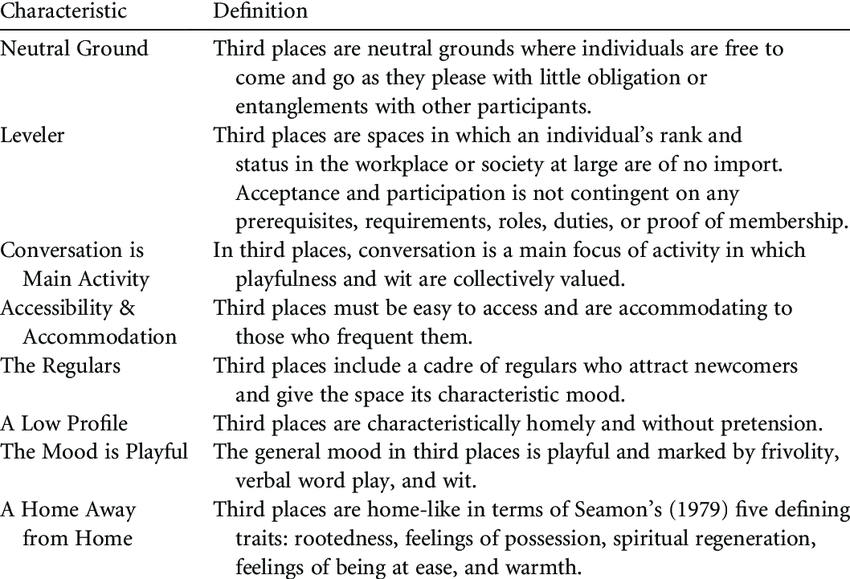
Research on weak ties shows that even small, repeated interactions increase belonging. You don’t need constant vulnerability. You need recognition.
Someone noticing you.
Someone expecting you.
Someone saying, “See you next week.”
That repetition stabilizes people more than we admit.
When third places disappear, loneliness rises. Not because people stopped caring, but because the structure that made caring easy faded.


Why Rhythm Matters More Than Intensity
Most loneliness isn’t dramatic. It’s subtle.
It’s not being missed.
It’s not having somewhere you reliably return.
It’s not being part of a pattern.
Belonging builds through repetition.
A weekly walk.
A standing Saturday market visit.
A dinner that happens even when you’re tired.
That’s how micro-belonging compounds: not through spectacle, but through return.
This Is Why We Love Farmers’ Markets
Farmers’ markets still operate on a rhythm.
You show up next week. And the week after that. Faces become familiar. Conversations pick up where they left off.
There’s a mother and son who visit Nora every week for their Guayusa Refresher and Lemonade. It’s not an event. It’s just what they do.
There’s a customer who comes to every market for a large unsweetened iced tea and proudly shows off her latest manicure before she leaves.
There’s another who orders the same large drink each week and scrolls through photos of her kittens. We’ve watched those cats grow up without ever meeting them in person.
None of that is dramatic.
It’s steady.
We could sell tea anywhere. We choose to sell it where community happens.
Not because markets are easy. They aren’t. Not because they’re trendy. Trends move on.
But because repeated, low-pressure human contact is rare. And it matters.
Tea doesn’t cure loneliness. But shared ritual slows things down enough for connection to form.
And connection, as the Surgeon General’s report makes clear, is a protective health infrastructure.
What Comes After Valentine’s
Romantic love is visible. Community love is maintenance.
Maintenance is quieter. It’s also more durable.
February is gray – energy dips, and isolation creeps in. This is when ritual does its real work.
The question isn’t whether you celebrated, it’s whether anything continues.
What space do you return to?
Who expects to see you?
What pattern exists in your life that isn’t tied to productivity?
If the answer feels thin, that’s not a personal failure. It’s an infrastructure gap.
And infrastructure can be rebuilt.
Love Is Infrastructure
Valentine’s will come back next year.
Loneliness will still exist the morning after.
Love that spikes once a year is sentiment.
Love that repeats becomes infrastructure.
Choose one third place this month and return to it four times. Protect the rhythm.
- Invite someone into a weekly steep.
- Show up to the same market.
- Host the dinner even when you’re tired.
Care doesn’t end with you. It expands when it circulates. And it lasts when it repeats.