
Leaf Grade
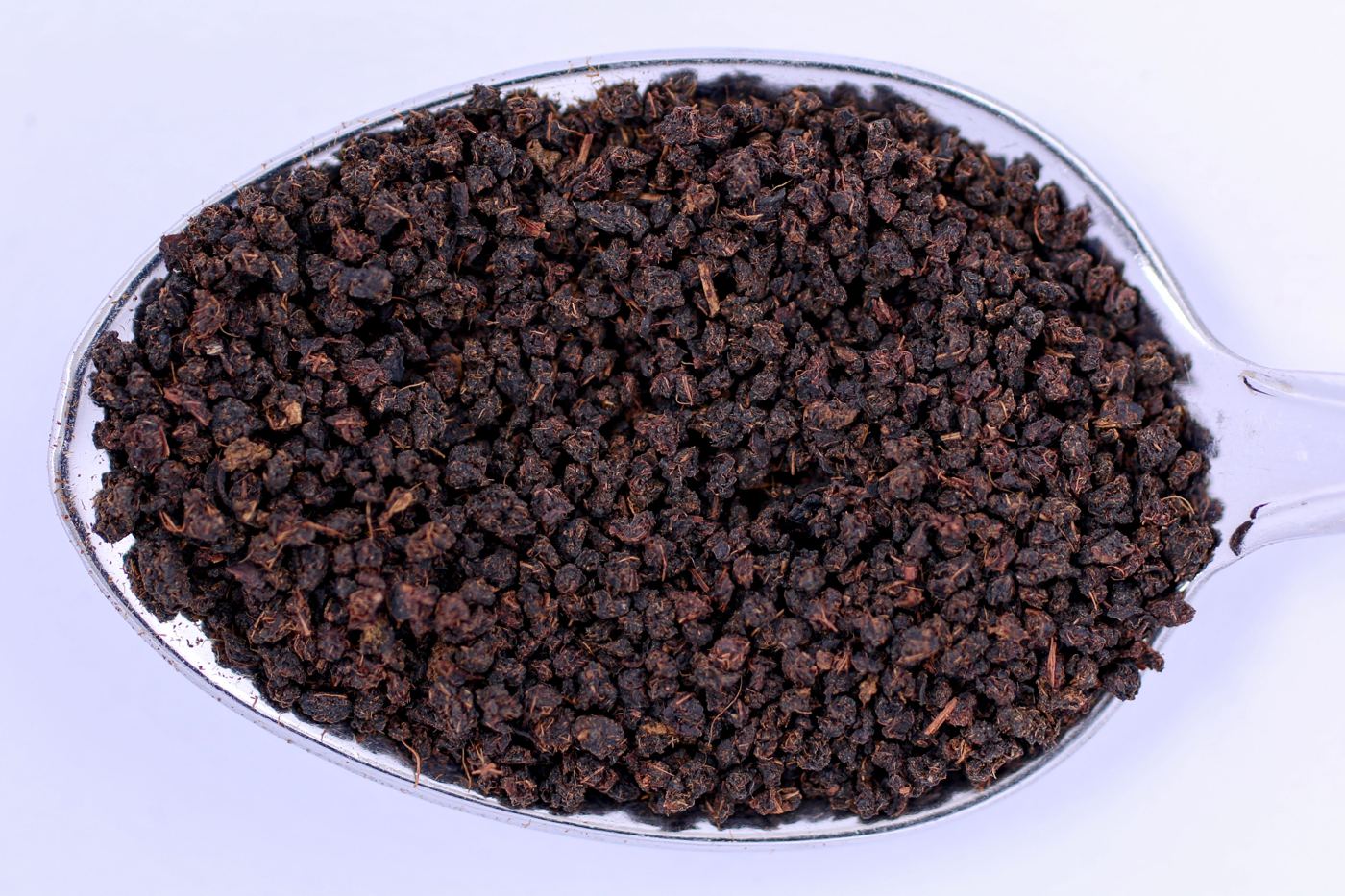
Photo: Marek Ruczaj / Pexels. Shared with CTC — both describe small, graded black tea particles, seen here on the same spoon.
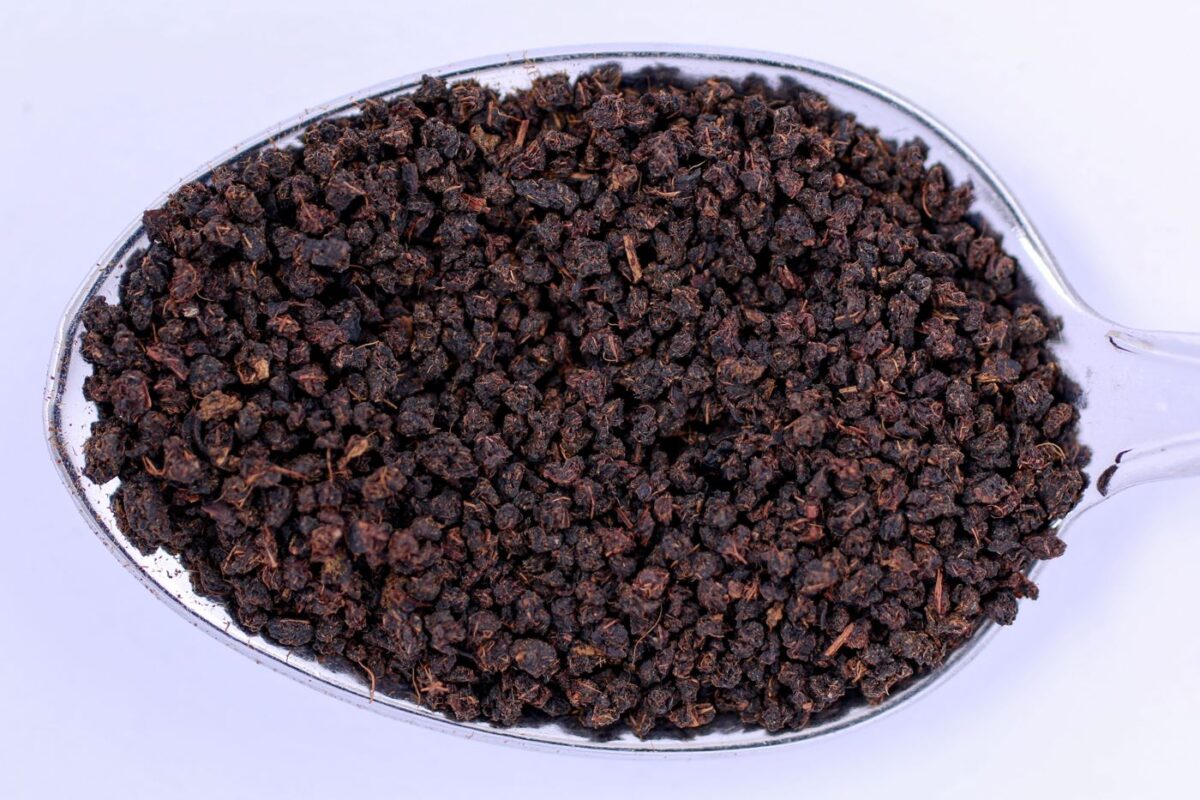
Dust, sometimes called tea dust, is the smallest particle size in black tea’s leaf-grading system — finer than fannings, which are already smaller than broken leaf. It’s what’s left after processing sorts leaf by size, and it’s mostly what ends up in cheaper, fast-brewing tea bags.
Leaf grading exists because particle size directly affects how a tea steeps. Smaller particles have more surface area exposed to water, so they release color, flavor, and caffeine faster and more intensely than whole or broken leaf. Dust is the extreme end of that scale — it brews almost instantly into a strong, dark cup, which is exactly why it’s the standard fill for basic bagged tea rather than loose-leaf blends meant to be steeped and savored.
What dust gains in speed and strength, it loses in nuance. Whole and broken leaf retain more of their original structure through processing, which preserves more of the subtler aromatic compounds that get lost when leaf is broken down this small. Dust isn’t a flaw exactly, just a tradeoff: fast, strong, and simple rather than complex.
Where It Comes From
Dust is typically a byproduct of CTC (crush-tear-curl) processing or of sifting broken leaf and fannings during grading, rather than something grown or picked separately. It’s real tea, just the smallest fraction of it — not a lesser plant, just a smaller cut.
Steeps fastest, strongest of any grade
Standard fill for basic, fast-brewing tea bags