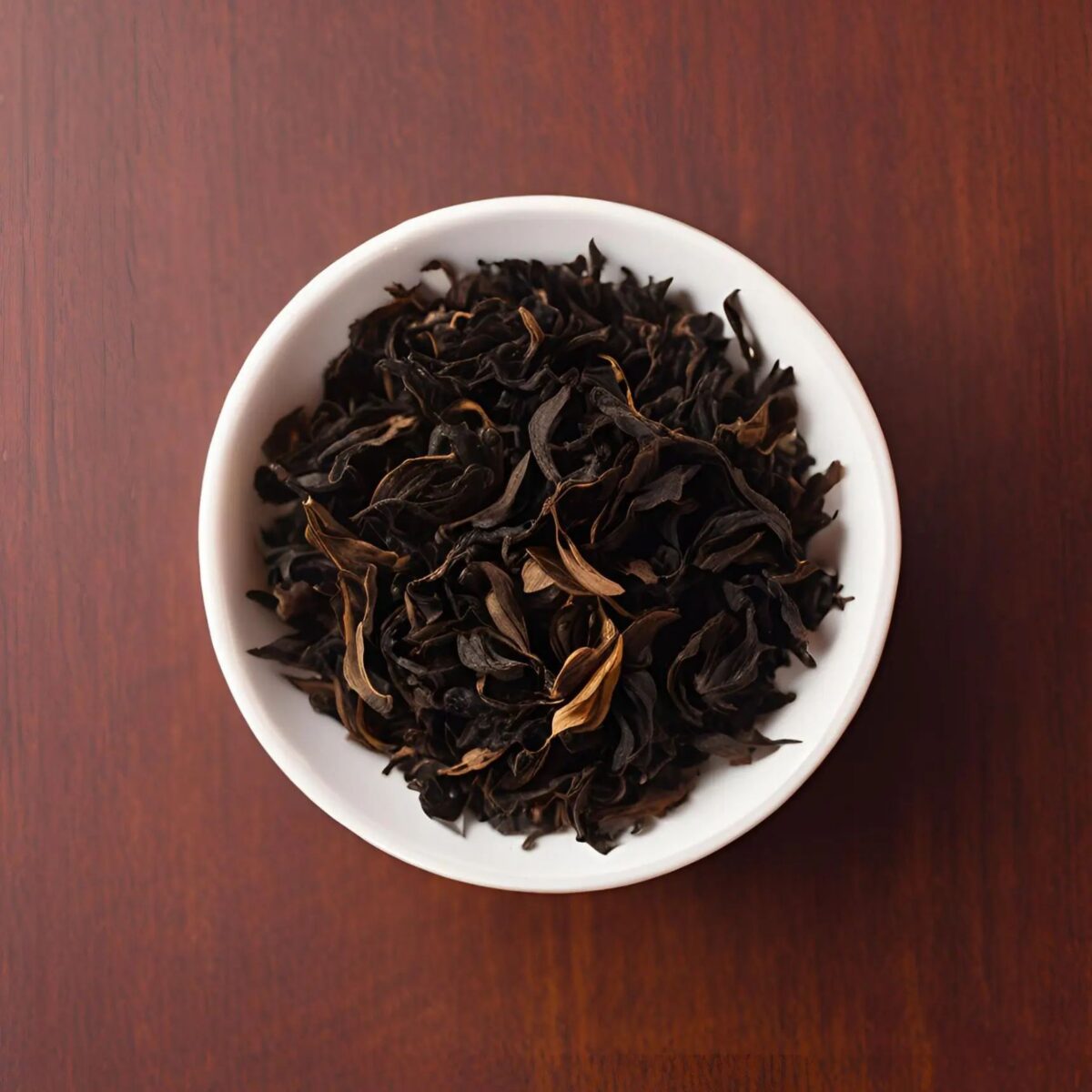
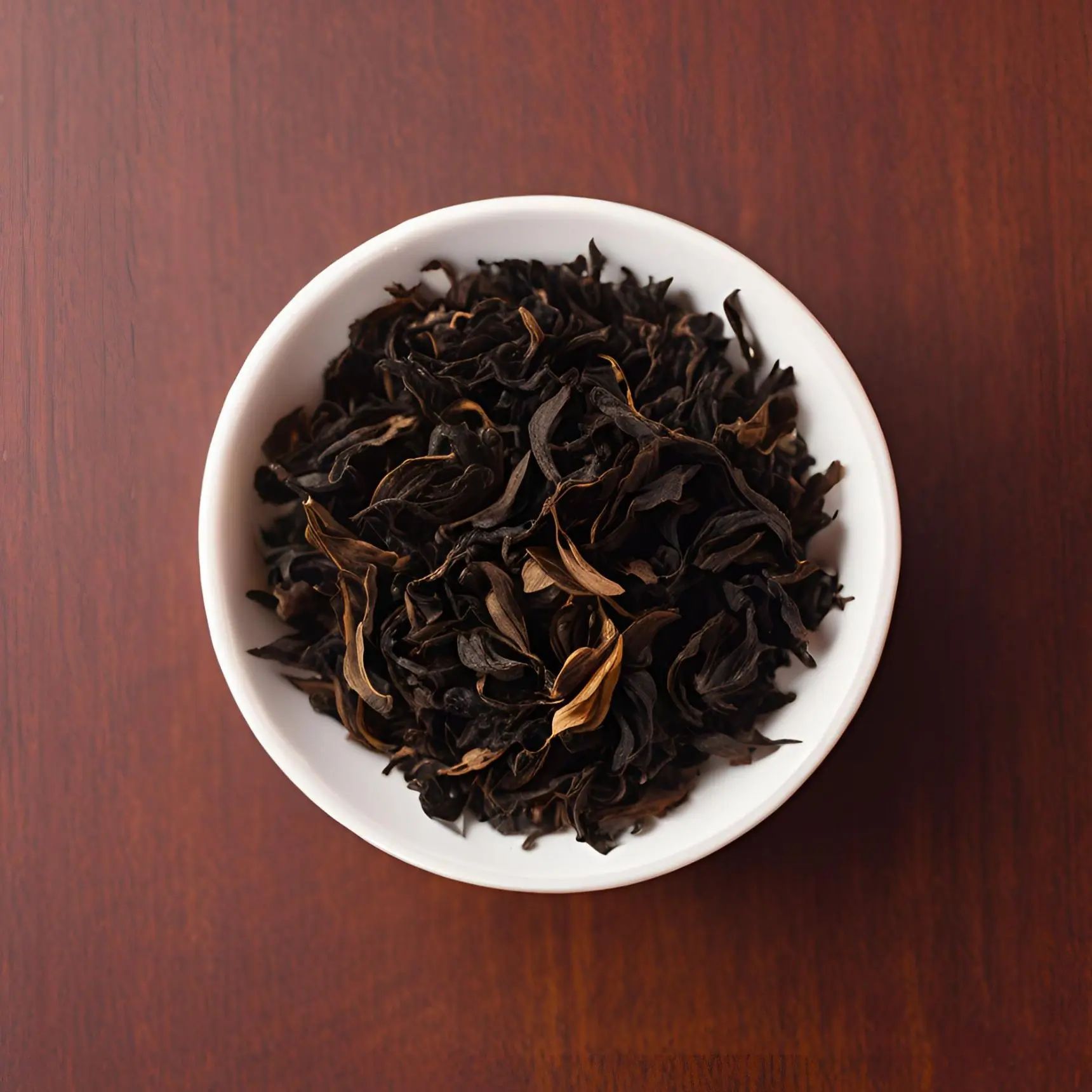
Black tea is the fully oxidized end of the tea spectrum, the darkest, boldest, and most caffeinated of the major tea categories. It’s also the tea most people already know, even if they’ve never heard the word “oxidation.”
Every black tea starts as the same plant as green, white, and oolong: Camellia sinensis. What makes it black tea is oxidation carried all the way through, until the leaf darkens completely, before heat locks the color and flavor in place. That full oxidation is what builds black tea’s deeper, maltier character and pushes its caffeine to the high end of the tea family.
A category with real range
“Black tea” covers a lot of ground. Assam and Ceylon lean malty and brisk. Lapsang Souchong is smoked over pinewood fires, giving it a smoky, almost campfire character. Darjeeling can be lighter and more floral than the rest of the category, depending on when in the season it’s picked. Black tea is also the traditional base for flavored blends like Earl Grey and English Breakfast, since its bold structure holds up to citrus, bergamot, or milk without disappearing.
Our Kumaon Black is a straightforward example of the category done well: single-origin black tea from the Kumaon region of India, with the malty depth and higher caffeine that defines the style, no blending or flavoring involved. Kumaon Black also forms the base of a couple of our chai blends, since a bold black tea base is exactly what stands up to the spice.
How to steep it
Black tea can take heat that would scorch a green or white tea. Use 1 teaspoon per 8 oz of water, heated to 200–210°F, just off a full boil, and steep for 3–5 minutes. For iced tea, steep 2 teaspoons in 8 oz of hot water for the same 3–5 minutes, then pour over ice. For cold brew, use about ½ ounce (roughly 4 tablespoons) per 64 ounces of cold water and refrigerate 8–12 hours, which softens the tannins and mellows the malt into something smoother.