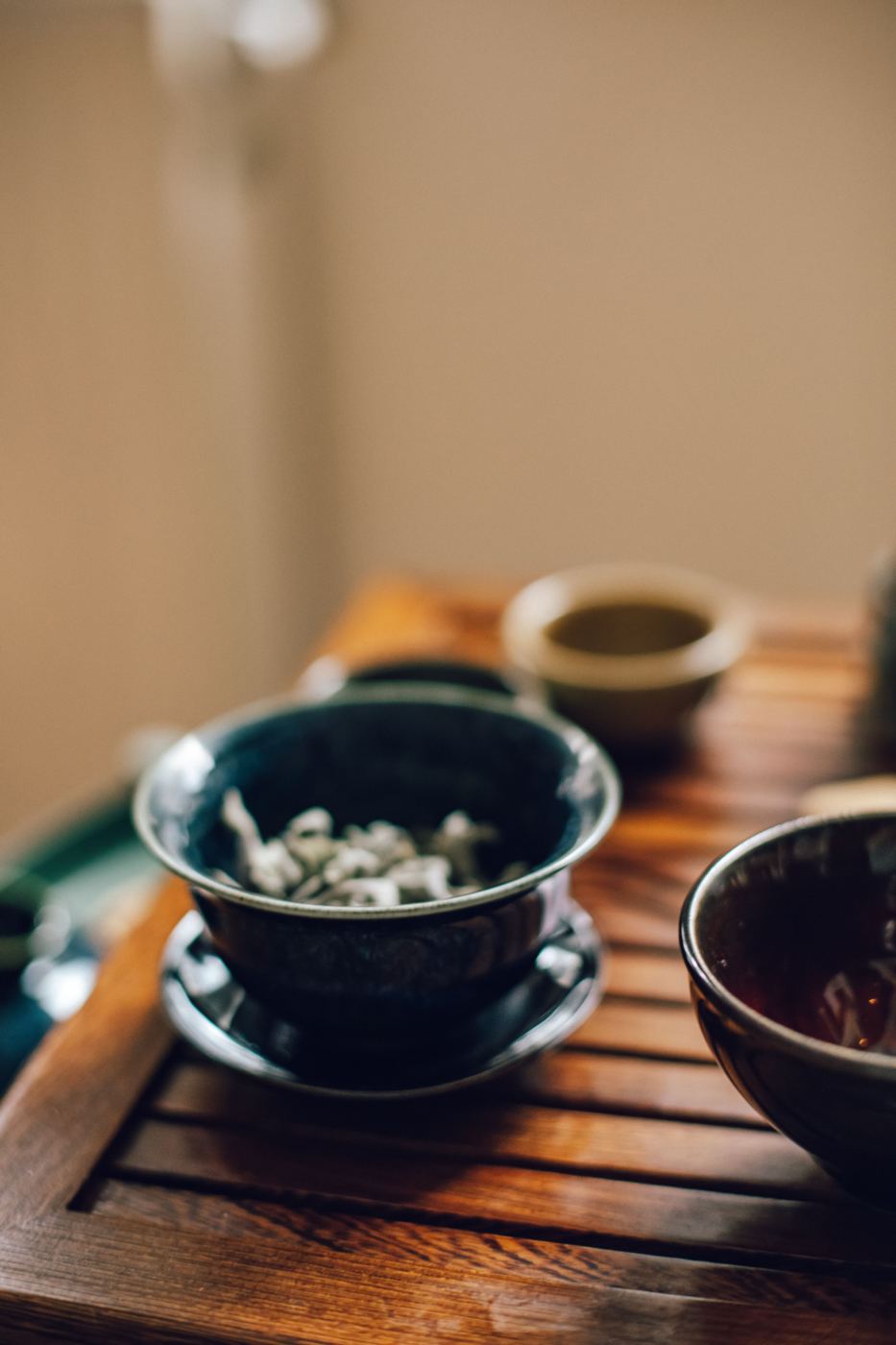
A gaiwan is a lidded bowl for steeping and drinking tea, made up of three pieces, a bowl, a lid, and a saucer, with no handle.
It originated in China during the Ming dynasty, when loose leaf tea replaced compressed cakes and drinkers needed a simple, handle-free vessel that let leaves move and unfurl freely in hot water. Traditional gaiwans are porcelain or glazed ceramic, though modern versions turn up in glass and matte clay too. The lid is shaped to nest just inside the bowl’s rim, tilting to hold back the leaves as tea pours out, while the saucer keeps hot ceramic off the table and, with practice, lets a drinker hold the whole thing without touching the hot bowl directly.
This entry is about the object itself. For how a gaiwan is actually used, the short, repeated infusions and high leaf ratios that define gaiwan-style brewing, see Gaiwan Steeping.