Steeping Method
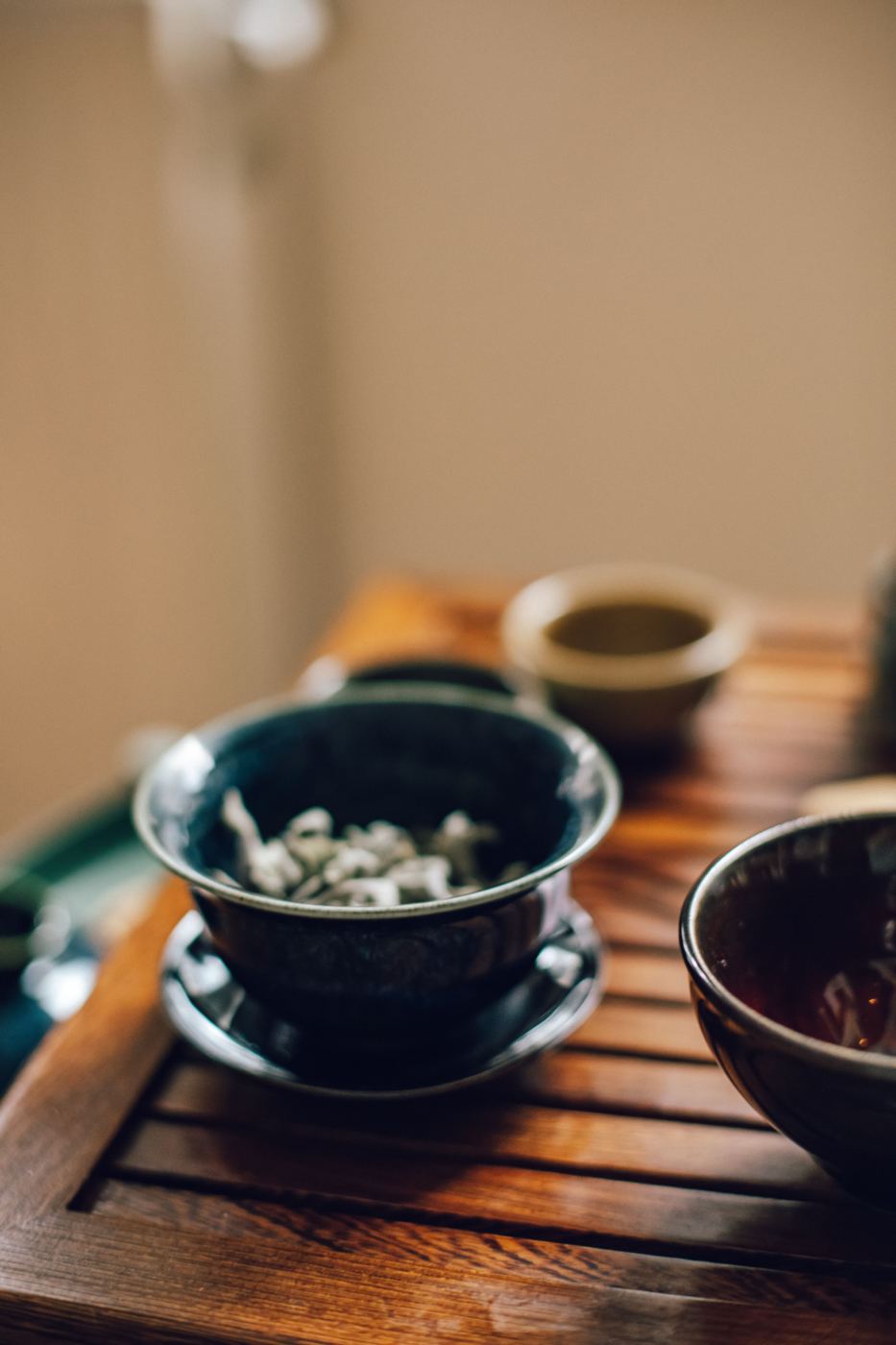
Photo: Roman Odintsov / Pexels
A gaiwan is a small lidded bowl — usually just a bowl, lid, and saucer, with no handle — used across China and increasingly worldwide for gongfu-style tea steeping: many short infusions instead of one long one.
The design dates back to the Ming dynasty, when loose leaf tea replaced compressed tea cakes and drinkers needed a simple vessel that let leaves move freely in hot water. The lid does double duty as a strainer, tilted just enough to hold back the leaves while the tea pours out through the gap, and as a way to hold the bowl without touching the hot ceramic directly.
Gaiwan steeping uses a high ratio of leaf to water — often filling a third or more of the bowl with leaf — and very short steeps, sometimes starting at 10-15 seconds and lengthening slightly with each subsequent infusion. Because the same leaves are steeped repeatedly rather than once, a single gaiwan session can pull five, eight, or more distinct infusions out of one batch of leaf, each showing a slightly different side of the tea as it opens up.
Why Tea Drinkers Use a Gaiwan
The appeal is control: a gaiwan lets you taste how a tea changes infusion to infusion, adjust steep time on the fly, and get more total cups out of higher-quality loose leaf than a single Western-style steep would. It takes more attention than a one-and-done pot of tea, which is part of why it’s associated with a slower, more deliberate way of drinking.
Built for many short infusions of the same leaves
Originated in China during the Ming dynasty