
Matcha Grade
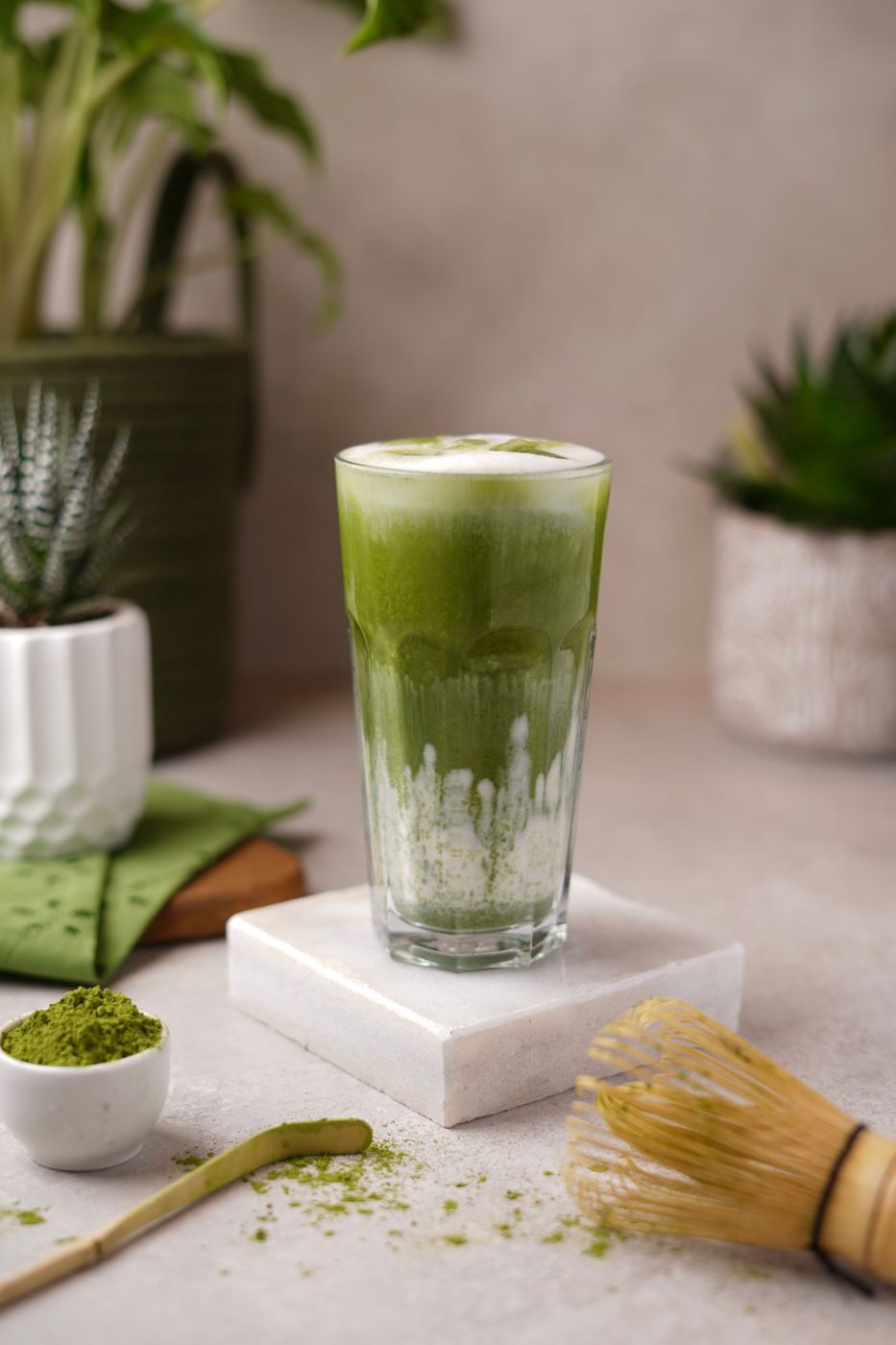
Photo: Gulsum Coban / Pexels
Culinary grade is the matcha made to be mixed with other things — milk, sugar, batter, ice — rather than whisked with plain water and drunk on its own. It’s stronger and more bitter than ceremonial grade, which is exactly what lets it hold its own in a latte, a smoothie, or a baked good.
The difference between culinary and ceremonial grade starts with the leaf. Ceremonial-grade matcha is stone-ground from the youngest, most tender shaded leaves, picked specifically to be drunk plain. Culinary grade is typically ground from slightly older leaves, harvested later in the season, which costs less to produce and delivers a more bitter, more astringent, more assertive flavor — a trait that would taste harsh whisked alone in water but disappears nicely once it’s balanced against milk fat, sugar, or other ingredients.
That’s not a flaw so much as a design choice. A culinary-grade matcha is judged by how well it performs in a recipe, not by how refined it tastes by itself. It holds its color through baking, cuts through dairy in a latte, and stays detectable in a dessert where a more delicate ceremonial-grade powder would get lost.
A Grading System With No Official Rules
Worth knowing: “culinary grade” and “ceremonial grade” are common industry terms, not a regulated classification. There’s no governing body verifying what counts as either one, so quality varies brand to brand under the same label. The more reliable signal is color, texture, and where the tea actually comes from, not the grade name printed on the tin.
Built for lattes, baking, and smoothies
“Grade” is a marketing term, not a certified standard