Matcha Grade
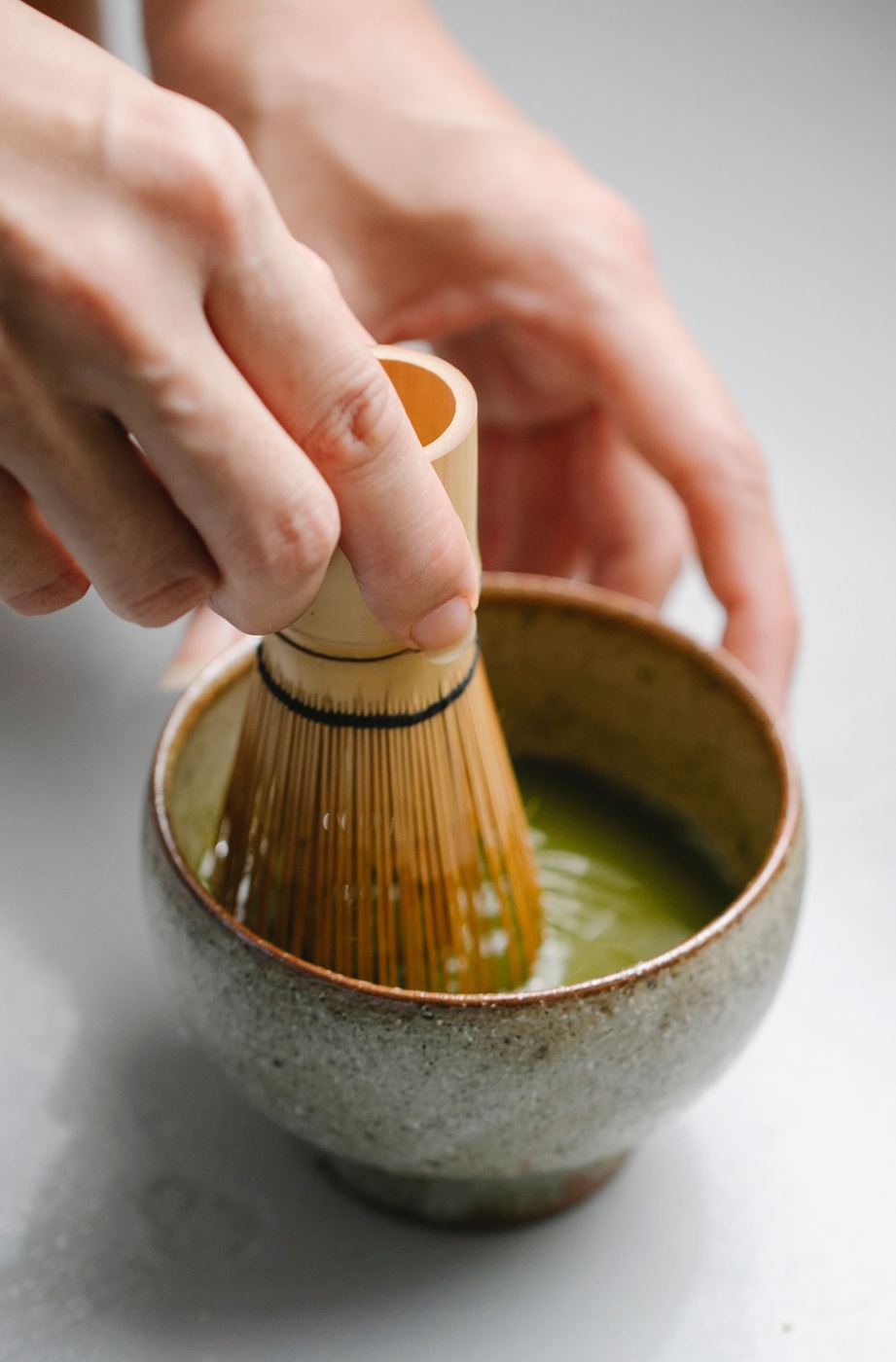
Photo: Charlotte May / Pexels
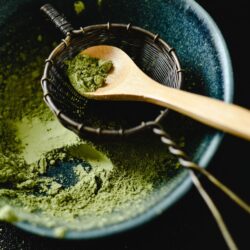
Ceremonial grade is matcha meant to be whisked with hot water and drunk plain, nothing added, in the tradition of the Japanese tea ceremony (chanoyu). It’s stone-ground from the youngest, most tender shade-grown leaves, which is what gives it a smoother, rounder, less bitter flavor than matcha meant for cooking.
The production behind it is deliberate. The tea plants are shaded before harvest, which raises chlorophyll and amino acid content in the leaf, and only the top, most delicate leaves are picked and stone-ground into a fine, vivid green powder. Because that powder is meant to stand entirely on its own, with no milk or sweetener to round out any rough edges, it has to be good enough to drink straight — smooth, a little sweet, savory in the way the Japanese term umami describes.
Whisked with just hot water in a wide bowl (a chawan) using a bamboo whisk (a chasen), ceremonial-grade matcha is frothy, concentrated, and more about the ritual of preparing it than about speed. That’s the opposite job of culinary-grade matcha, which is built to get mixed into other things rather than drunk on its own.
A Real Product, Not a Regulated Standard
“Ceremonial grade” is a widely used industry term, not a certified classification with an official body enforcing it — a distinction worth knowing before paying a premium for the label alone. What actually separates a good one is real: leaf quality, shading, grind, and freshness, not just what the package calls itself. Moody Teas’ own matcha is stone-ground from shade-grown Japanese leaves and marketed in that ceremonial style, though we’re upfront that the term itself isn’t a regulated guarantee — we’re sourcing for real color, texture, and flavor, not just the label.
Meant to be whisked with water alone
Central to Japanese tea ceremony (chanoyu)