Steeping Method
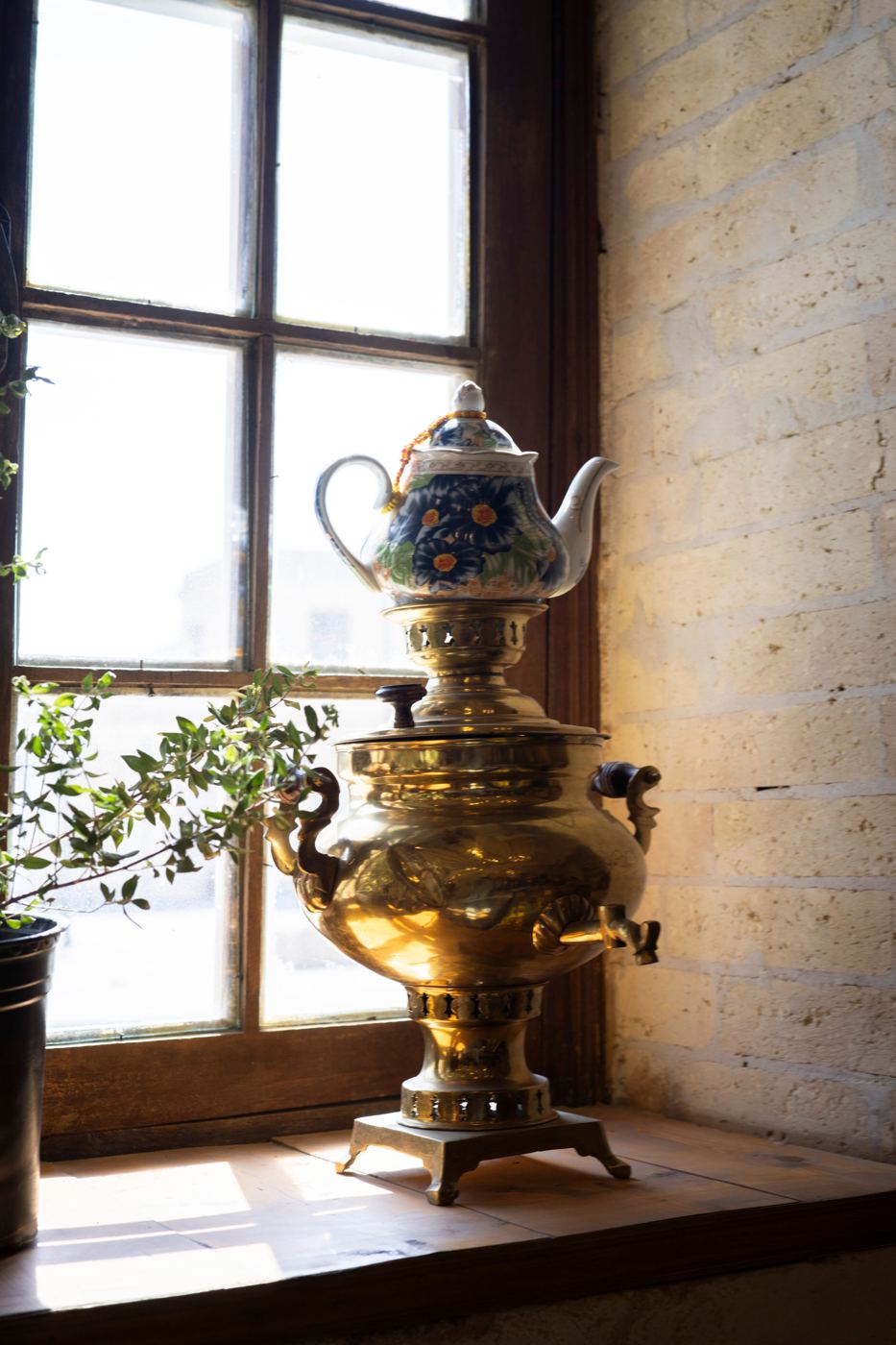
Photo: Khezez / Pexels
A samovar is a metal urn — traditionally brass, copper, or silver — that heats water continuously and keeps it hot for hours, built around a two-part steeping method still used across Russia, Iran, Turkey, and Central Asia.
A small teapot sits on top of the samovar and holds zavarka, a very strong, concentrated tea brewed with far more leaf than usual and steeped until dark and intense. Each cup is then built individually: a small amount of zavarka goes into a glass or cup, topped off with hot water drawn straight from the samovar’s spigot below. That’s the core of samovar steeping — you’re not brewing a whole pot to one strength, you’re brewing a concentrate and diluting it to taste, cup by cup.
The samovar itself traditionally stayed hot for an entire gathering, originally heated by charcoal in a central pipe and later by electricity, which made it as much a social centerpiece as a brewing tool — tea kept flowing for hours without anyone needing to re-boil water or re-steep leaves.
A Ritual Built for Sharing
Because everyone dilutes their own zavarka to their own preferred strength, samovar tea naturally accommodates a room full of different tastes from one shared pot of concentrate — part of why it became so tied to hospitality and long, unhurried tea sessions rather than a quick solo cup.
Keeps water hot for hours without re-boiling
Long-standing tradition across Russia, Iran, and Central Asia