Tea Tradition
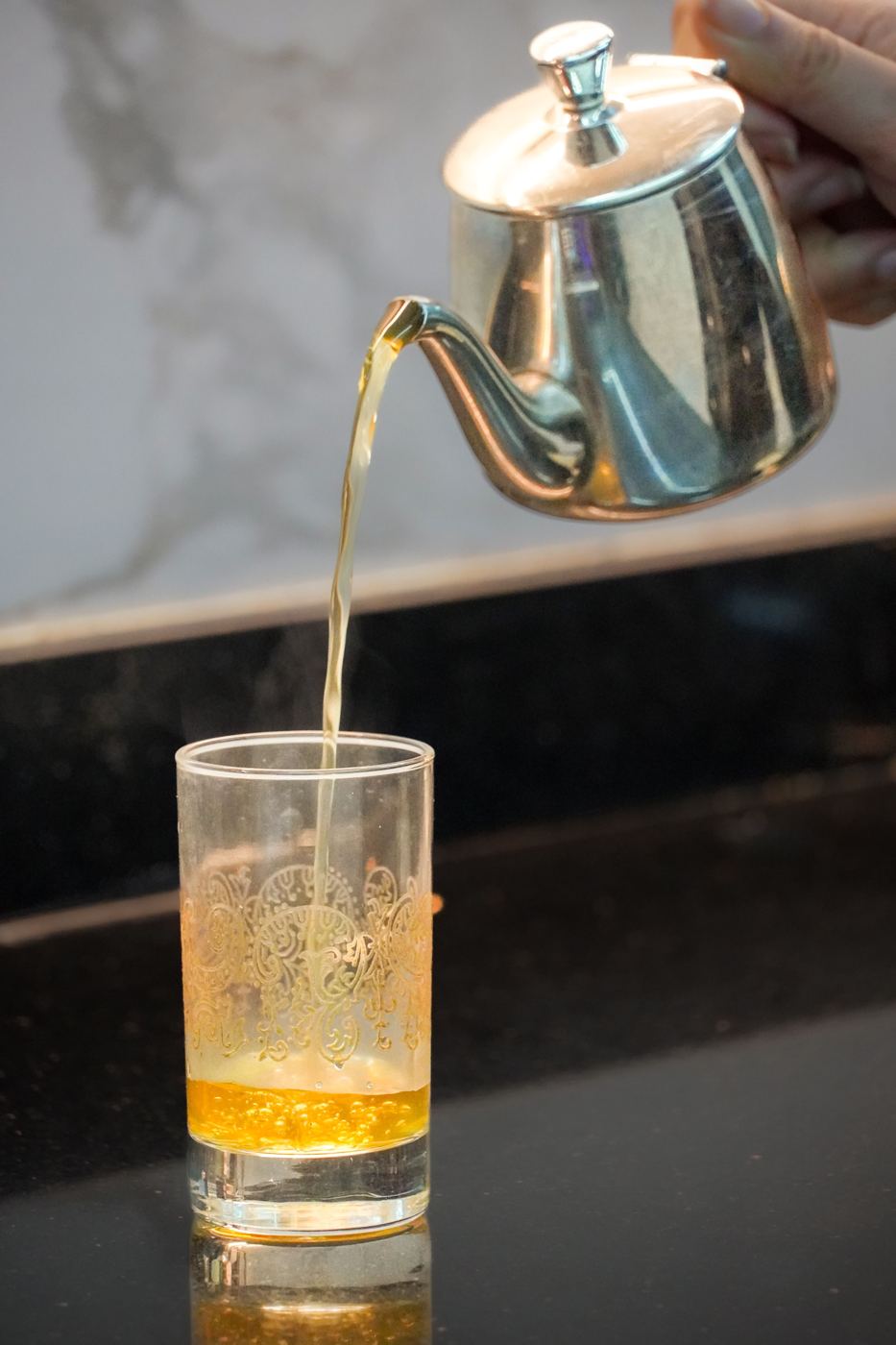
Photo: Nabil Atiche / Pexels
Moroccan steeping is built around one signature move: green tea steeped with fresh mint and sugar, then poured from a foot or more above the glass so the stream aerates as it falls and forms a thin layer of foam on top.
The base is usually a Chinese gunpowder green tea, rolled into small pellets, steeped in a metal teapot with a generous handful of fresh spearmint leaves and sugar added directly into the pot rather than the cup. The tea is often steeped, poured back into the pot, and steeped again to build strength and let the mint fully infuse before serving — a slightly different rhythm than a single-steep Western cup.
The high pour isn’t just showmanship. Aerating the tea as it falls softens sharp edges in the brew and helps release aroma right as it’s served, and pouring a small taste-test glass first (then returning it to the pot) is a traditional way of checking the balance of mint, sugar, and tea before serving guests. The tea is typically served in small, engraved glasses rather than mugs, often three rounds to a sitting, with each round tasting a little different as the leaves and mint continue to infuse.
The Art of the High Pour
In Morocco, preparing and pouring the tea is frequently a host’s job and a mark of hospitality — offering tea, and pouring it well, is part of welcoming a guest, not just a beverage service. The three traditional rounds are sometimes described as varying in strength from one glass to the next as the pot is topped up.
Poured from height to aerate and add foam
Traditionally served in three rounds from one pot