
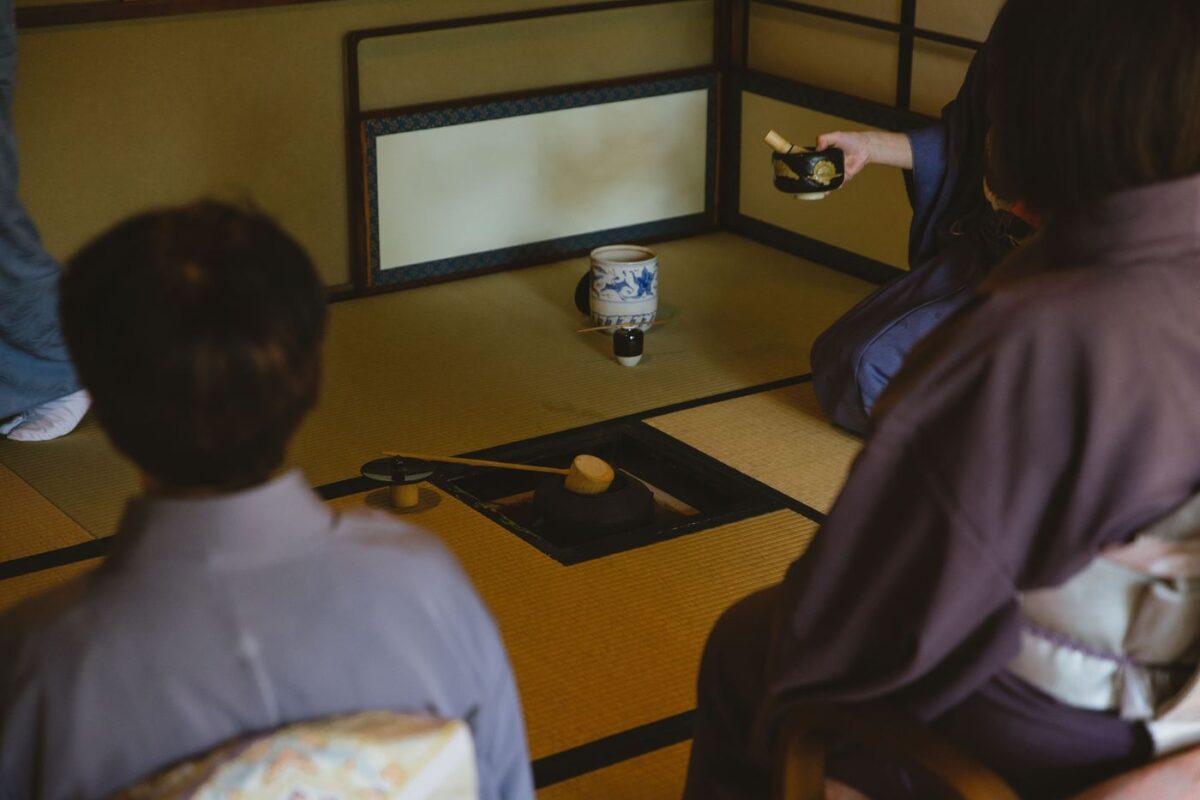
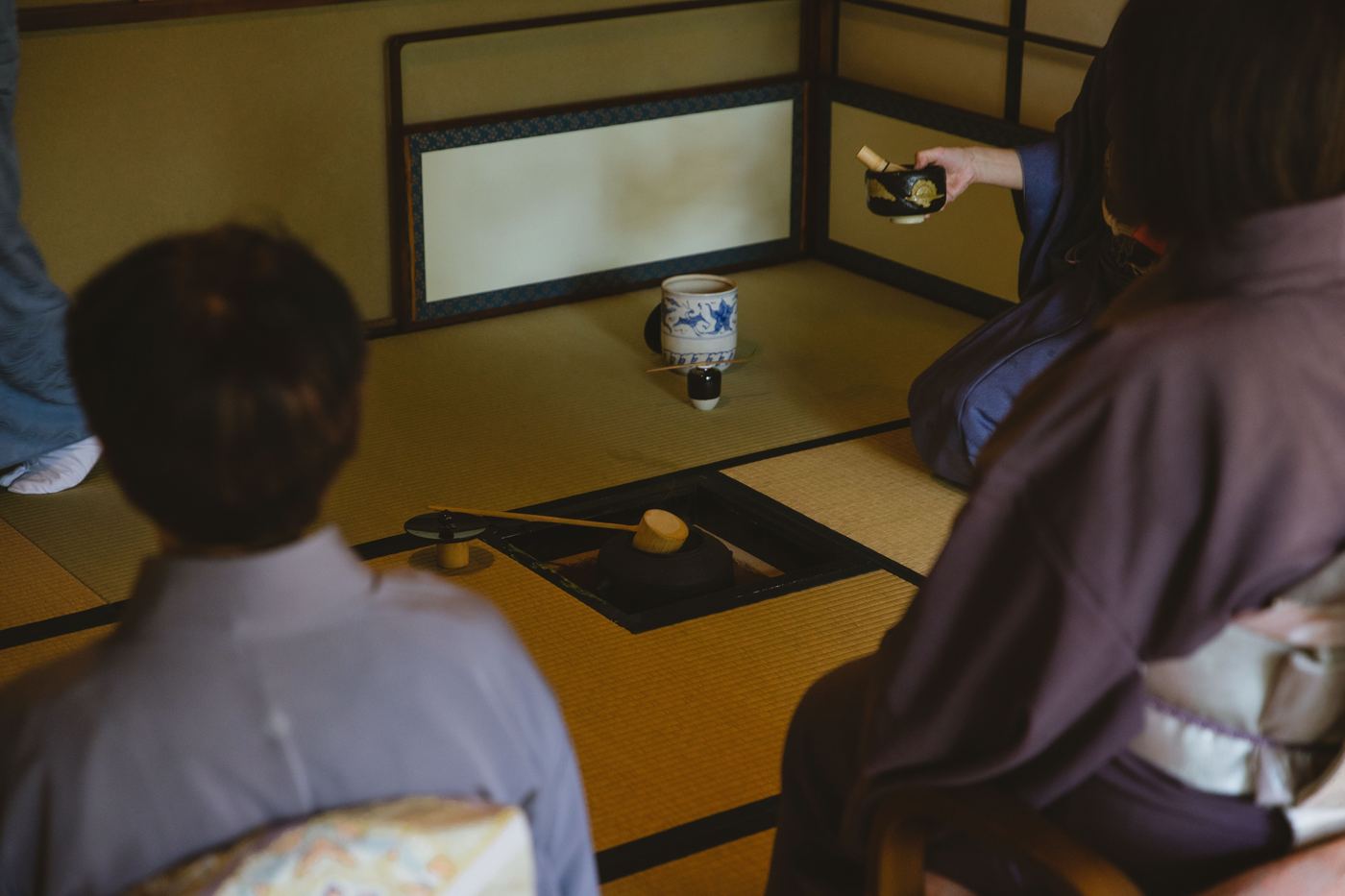
Photo: Ryutaro / Pexels
A chaji is the full, formal version of a Japanese tea gathering: a multi-hour event built around a kaiseki meal, charcoal ritual, and two distinct servings of tea.
Where a casual chakai might last half an hour and offer only a bowl of thin matcha and a sweet, a chaji can run close to four hours. Guests are welcomed into a garden path, watch the host lay charcoal in the hearth, share a kaiseki meal, and only then move into the tea itself: first thick tea, koicha, served from a single bowl passed between guests, then thin tea, usucha, served individually. Each phase, known as a seki, is treated as its own complete event within the larger gathering.
Chaji sits at the heart of chanoyu, the broader Japanese way of tea, and is generally considered its most complete and demanding expression. Guest lists are kept small, often four or five people, so the host can attend fully to each person present.
The Full Gathering
Hosting a chaji well takes years of study: menu planning, charcoal work, flower arranging, and the tea service itself all have to come together in one unhurried afternoon. It’s practiced today mostly within tea schools and among serious students of chanoyu, a deliberate slowing-down that treats hospitality as a discipline rather than an errand.
Includes a kaiseki meal and charcoal ritual
Serves both thick tea (koicha) and thin tea (usucha)