Tea Culture
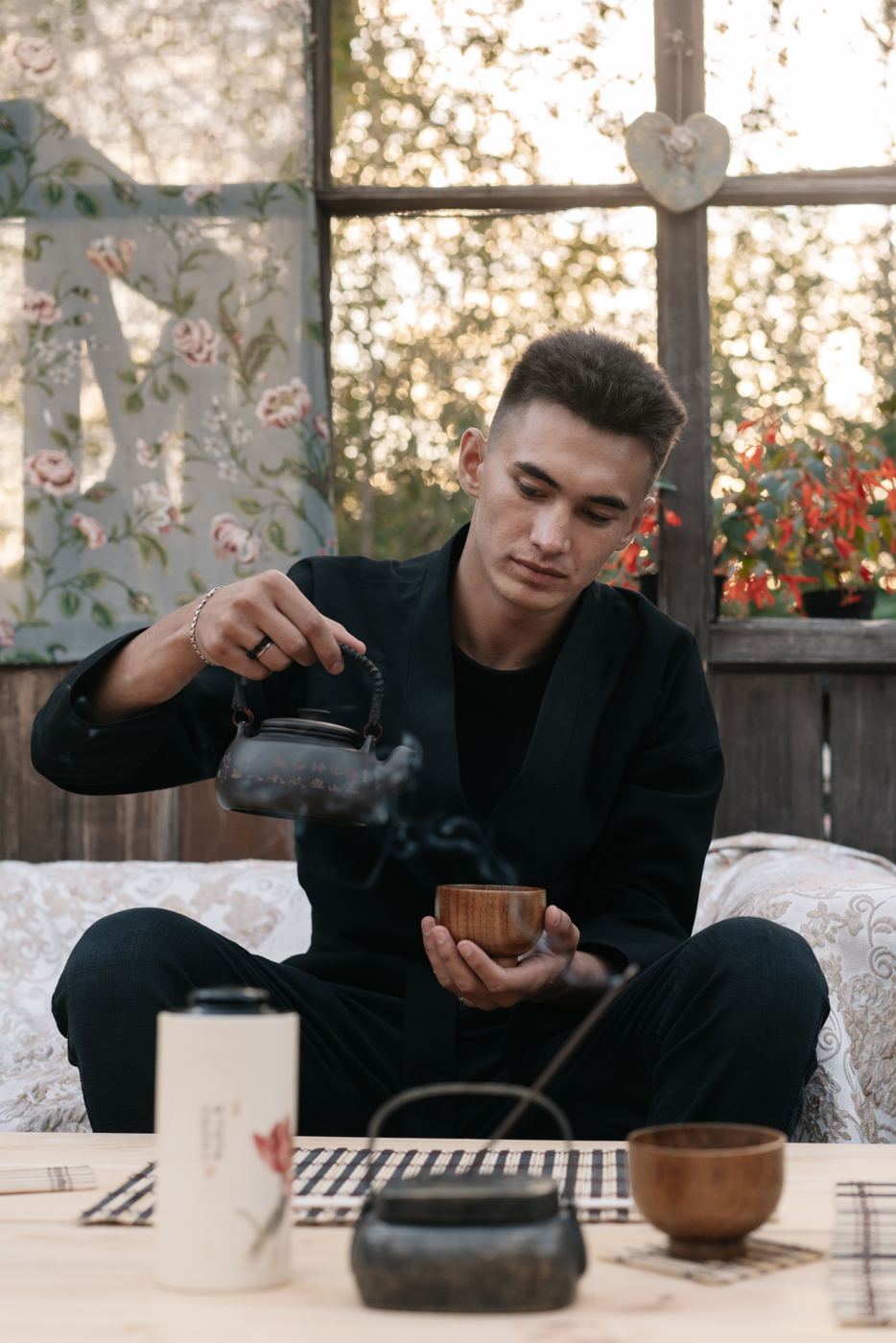
Photo: Mikhail Nilov / Pexels
A tea ceremony is any structured practice of preparing and serving tea in which the process itself, not just the drink, is the point.
The phrase covers a wide family of distinct traditions rather than one universal ritual. China’s gongfu cha treats tea as a matter of skill, brewing the same leaves through many short infusions in small vessels. Japan’s chanoyu and its most formal expression, chaji, center on whisked matcha and years of studied, precise movement. Korea’s darye emphasizes etiquette and the relationship between host and guest as much as the tea itself. Morocco’s atay is built around a dramatic high pour of mint tea, offered as an act of daily hospitality.
Each of these grew out of its own history, religion, and social customs, and none is a variation on another. What they share is a set of underlying priorities: slowing down, paying close attention, and treating the act of serving tea as a form of respect toward whoever’s on the receiving end.
A Family of Traditions, Not One Ritual
It’s worth resisting the urge to flatten these into one generic idea of “the tea ceremony.” Each tradition has its own name, its own history, and its own community still practicing it today, and each deserves to be understood on its own terms rather than as a stand-in for the others.
Includes gongfu cha, chanoyu, chaji, darye, and atay
Shared threads: hospitality, attention, respect