
Photo: Cottonbro Studio / Pexels
Chanoyu, “the way of tea,” is the formal Japanese practice of preparing and serving powdered matcha with precise, unhurried movements in front of guests.
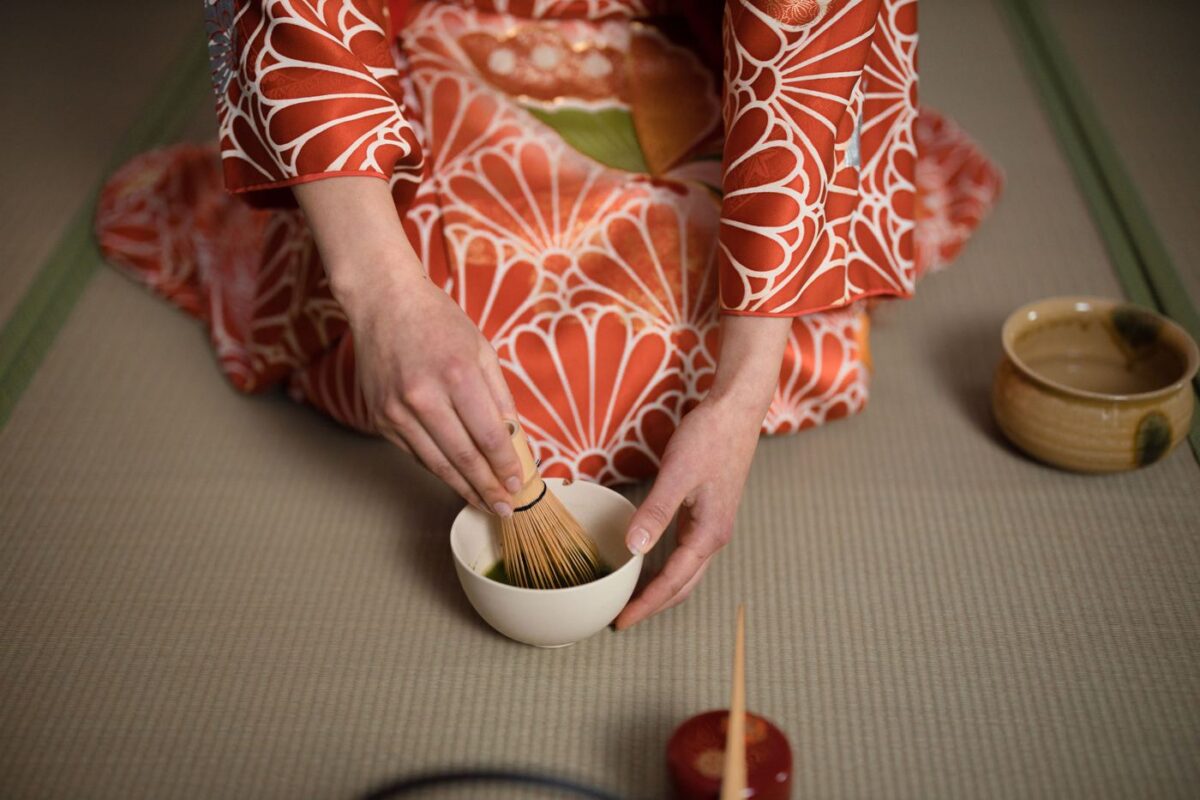
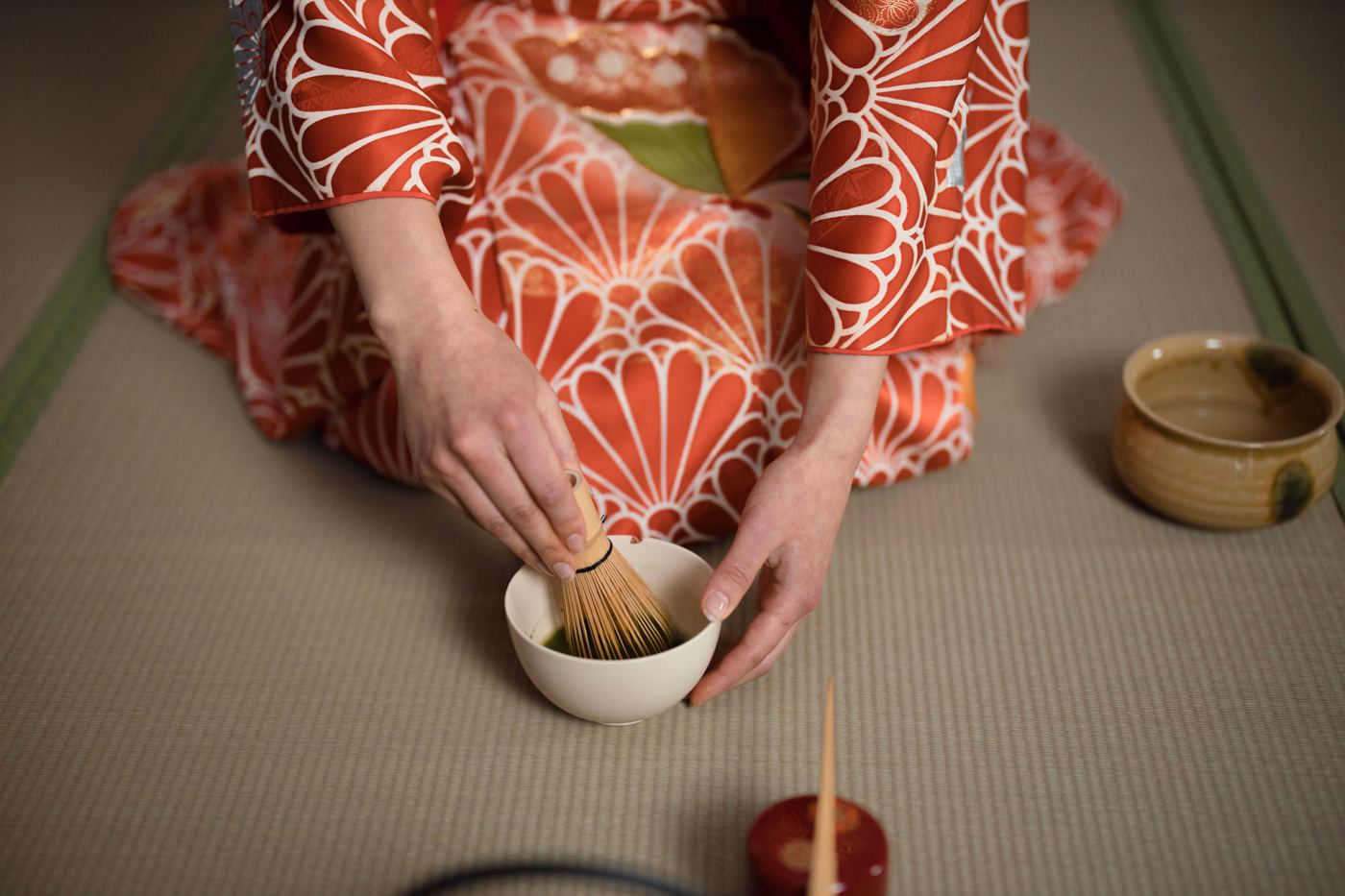
A host measures matcha into a bowl, adds hot water, and whisks it to a froth with a bamboo chasen, all according to a set sequence of gestures refined over centuries. Every motion, from folding the cloth to turning the bowl before it’s offered, is part of the practice, not decoration around it. Guests receive the bowl with both hands, admire it, and drink.
The form most practiced today was shaped in the 16th century by the tea master Sen no Rikyu, who drew chanoyu away from displays of wealth and toward wabi-sabi, an aesthetic of humility, imperfection, and quiet simplicity. Chanoyu grew out of earlier tea-drinking customs brought from China, but it was Rikyu’s generation, working under Zen Buddhist influence, that gave it the restrained form still taught today.
More Than a Drink
Chanoyu is often summarized by four principles: harmony, respect, purity, and tranquility. Practitioners may study for years, sometimes a lifetime, to internalize a single tea gathering’s worth of movement, working through named schools of practice that each preserve slightly different forms passed down from teacher to student. It’s a living art form in Japan today, taught in dedicated schools and practiced both casually, over a simple bowl of thin tea, and with great formality, in a full chaji gathering.
Formalized by Sen no Rikyu in the 16th century
Guided by harmony, respect, purity, tranquility