
Photo: Nabil Atiche / Pexels
The Moroccan tea ceremony, known as atay, is a daily ritual of hospitality built around gunpowder green tea, fresh spearmint, sugar, and a distinctive high pour.
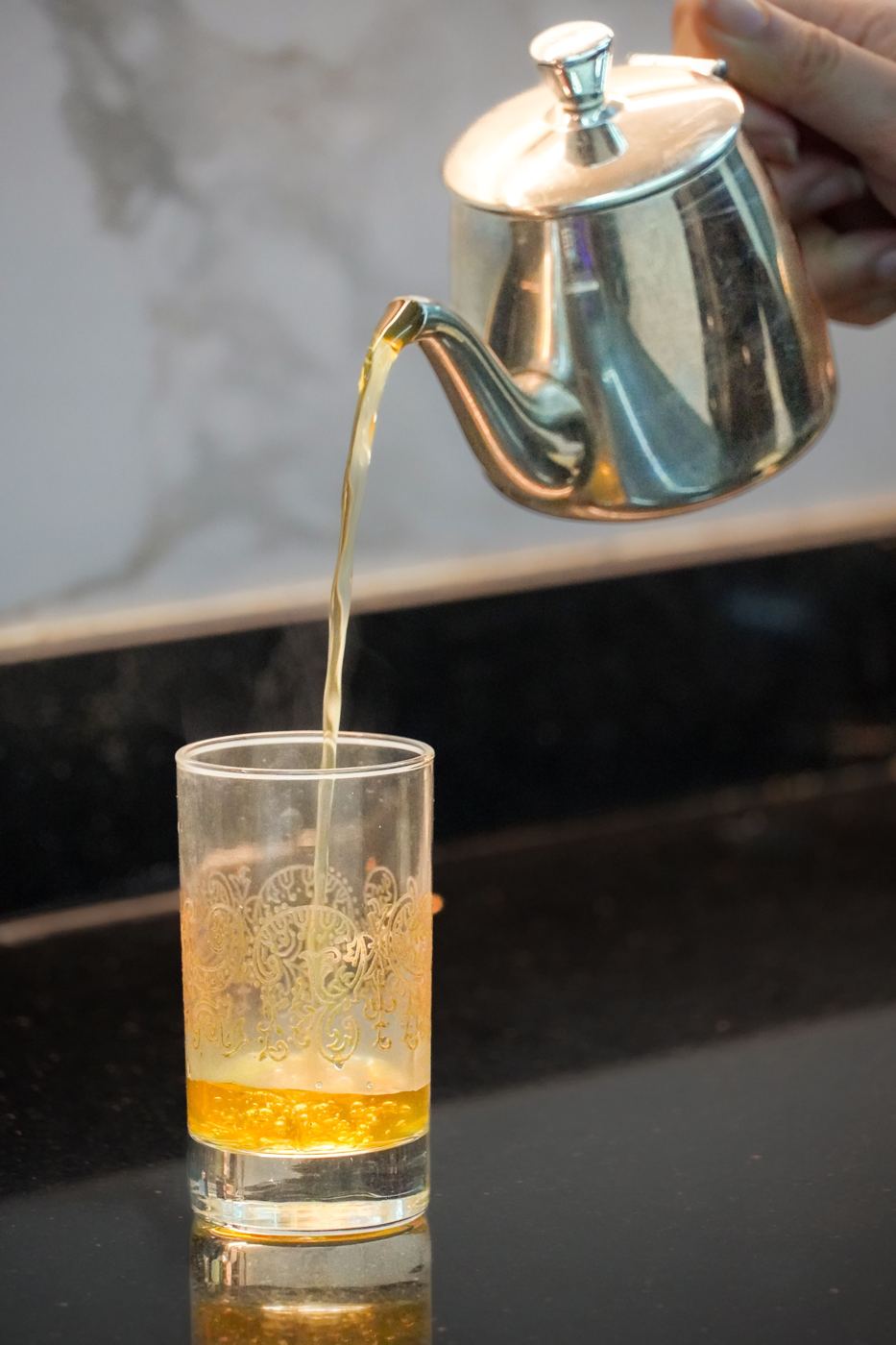
A host brews the tea in a metal pot with mint and sugar, then pours it from about a foot above small, ornately decorated glasses. The height isn’t showmanship for its own sake: it aerates the tea, cools it from boiling to drinkable in seconds, and raises a light foam, rghwa, considered a sign the tea was made well. Tea is typically poured three times from the same pot, each round left to steep a bit longer and coming out a little stronger than the last.
Offering tea this way is a deeply rooted social custom across Morocco, extended to family, guests, and often strangers as a gesture of welcome. Refusing a glass can be considered impolite, and the host, not a servant or staff member, usually pours every glass themselves as a mark of respect.
Poured, Not Just Served
What makes atay a ceremony rather than just a drink is the attention placed on the pour and the pace: sitting down, receiving the tea with the right hand, and staying for a while are treated as part of the exchange, not an afterthought to it.
Poured from height to build foam and cool the tea
Served in three rounds, each stronger than the last