
ALTERNATIVE CAFFEINE PLANT
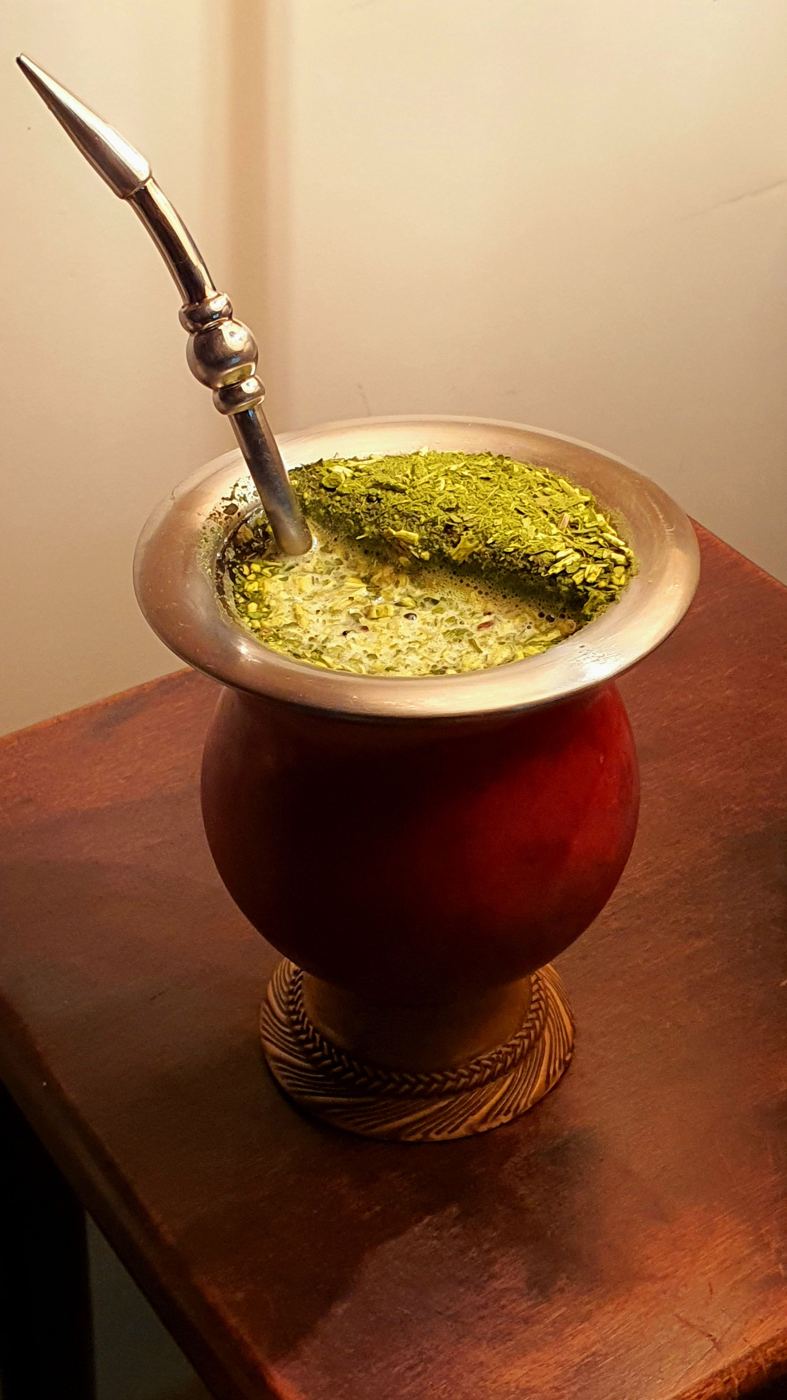
Photo: Walter Spiess / Pexels
Yerba mate (Ilex paraguariensis) is a naturally caffeinated holly relative native to the subtropical forests of Argentina, Uruguay, Paraguay, and southern Brazil, brewed and shared as a daily social ritual across the region.
Unlike a typical cup of tea, traditional mate is prepared in a hollowed gourd (also called a mate or a cuia) packed with dried, ground yerba leaves and sipped through a metal straw called a bombilla, which filters out the leaf particles. Hot water is added repeatedly as the drinker works through the same gourd, and in many households and friend groups the same gourd is refilled and passed hand to hand — a communal habit that’s as central to the culture as the drink itself.
The flavor is grassy, herbaceous, and slightly bitter, closer to a strong green tea than to coffee, and it’s traditionally been valued for a steady, sustained lift rather than a sharp jolt — though as with any caffeinated plant, the actual effect depends on the drinker and how it’s prepared. Yerba mate has also been studied for its antioxidant content, though it’s best treated as a flavorful ritual rather than a settled medical remedy.
Why It Matters
Yerba mate belongs to the same small family of naturally caffeinated hollies as yaupon and guayusa — plants that evolved caffeine independently of the Camellia sinensis tea plant and coffee. For drinkers curious about caffeine sources outside the usual coffee-or-tea binary, it offers a distinct brewing ritual and a flavor unlike either.
Traditionally shared from a gourd with a bombilla
Naturally caffeinated holly relative