Oolong sits in the middle of the tea spectrum on purpose. Where green tea is barely oxidized and black tea is fully oxidized, oolong stops oxidation somewhere in between, and that “somewhere” is deliberately wide.
A lightly oxidized oolong, oxidized closer to 10-20%, can taste almost green: floral, light, sometimes grassy. A darker oolong, pushed toward 60-70% oxidation, moves closer to black tea territory with toastier, deeper notes. That range is exactly why oolong has the most varied flavor profile of any single tea category, rather than one consistent character the way green or white tea does.
Rolled, not just oxidized
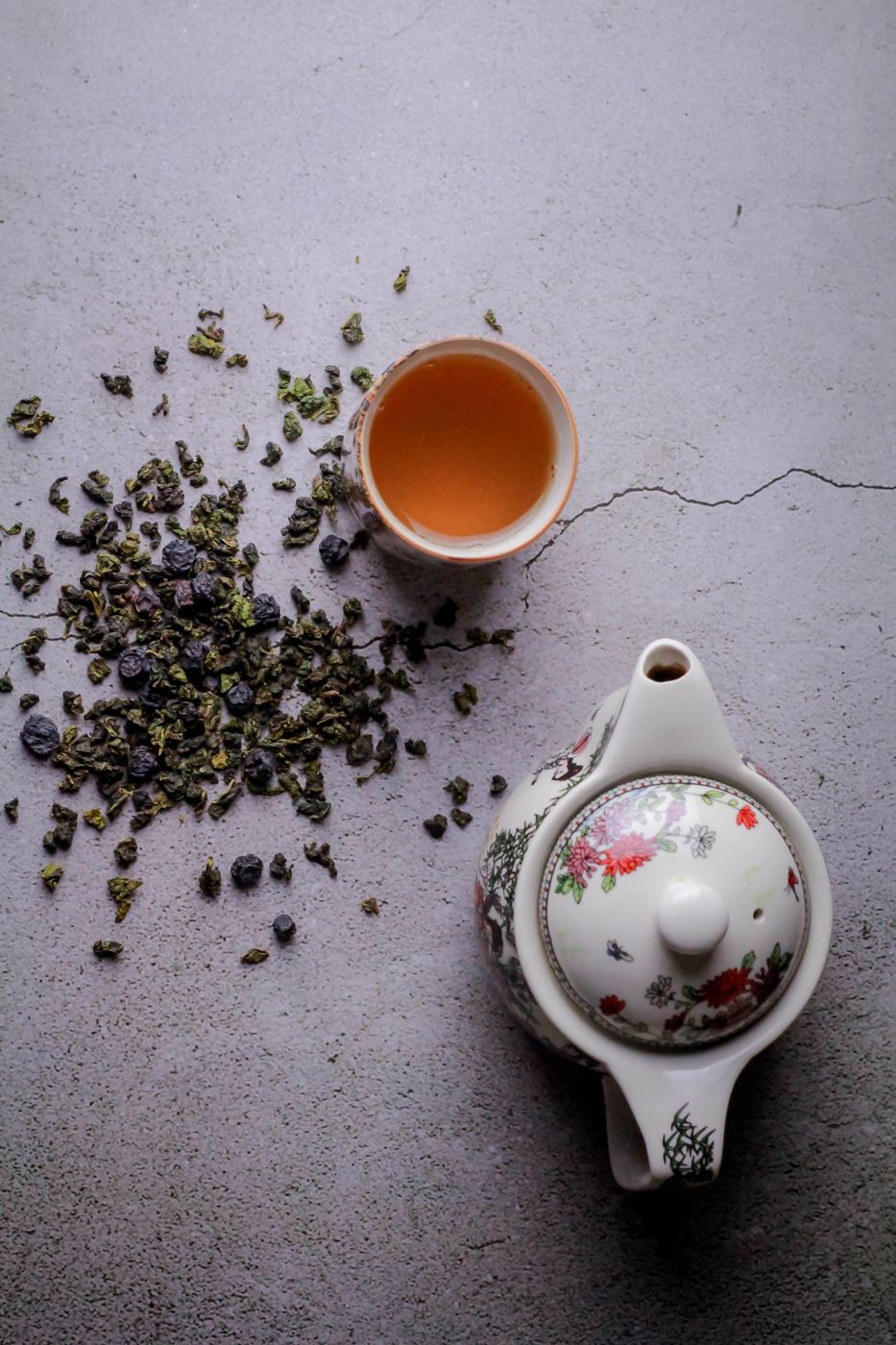
Oolong’s other defining trait is how the leaf itself is handled. Many oolongs are rolled into tight balls or long twisted strips rather than left flat, which slows the leaf’s exposure to air during brewing and lets it unfurl gradually over multiple steepings. Tie Guan Yin, one of the best-known oolongs, is typically rolled this way; Da Hong Pao, a darker roasted oolong from the Wuyi Mountains, is another classic reference point at the more oxidized end of the range.
We don’t currently carry a dedicated oolong in our own lineup, but it’s worth knowing the category even if you’re shopping our black or green teas instead, since “partially oxidized” is the concept that explains why green, oolong, and black taste so different despite starting on the exact same plant.
How to steep it
Oolong’s steeping instructions shift depending on how oxidized a particular oolong is, but a reasonable general starting point is water around 185–205°F for 2–3 minutes. Rolled oolongs are also traditionally steeped multiple times over, using shorter infusions, since the tightly rolled leaf unfurls gradually and keeps giving up flavor across several rounds rather than exhausting itself in one long steep the way a fully open leaf does.