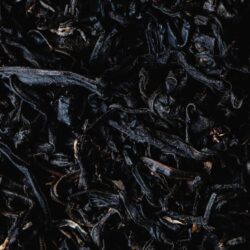
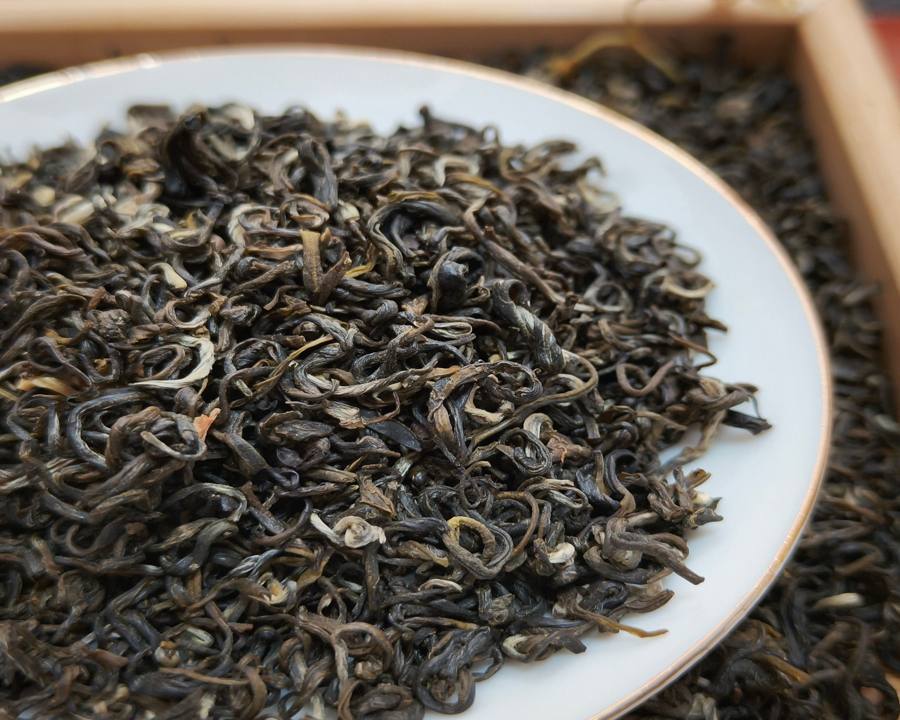
Oxidation is the chemical reaction that happens when a tea leaf’s natural compounds are exposed to oxygen after the leaf’s cell walls are broken. It’s the single biggest reason a black tea and a green tea, cut from the exact same plant, end up tasting nothing alike.
Every tea, no exceptions, starts as the leaf of one plant: Camellia sinensis. What separates the tea family’s major styles isn’t the plant, it’s how far the leaf is allowed to oxidize before heat locks it in place. Green and white teas are stopped almost immediately, so they stay close to the leaf’s original green color and grassy, delicate flavor. Oolong is stopped partway through, landing it in a wide middle ground. Black tea is carried all the way, until the leaf has fully darkened, which is what builds its deeper, maltier character.
Why it matters in the cup
Oxidation isn’t just about color. As the leaf’s compounds react with oxygen, they break down and recombine into new ones, and those new compounds are what create black tea’s bolder body and darker liquor. A tea maker controls oxidation on purpose. Rolling or bruising the leaf ruptures its cells and starts the reaction; time and humidity let it run; heat from firing or drying stops it dead at the exact point the maker wants. Stop it too early and a black tea tastes thin. Let it run too long and it turns flat and dull. The skill is entirely in that timing.
One thing oxidation is not: fermentation. They get used interchangeably in casual tea writing, but they’re different processes. Oxidation is a chemical reaction with oxygen, no microbes involved. Fermentation, the kind that shapes a tea like pu-erh, actually depends on microbial activity over time. A black tea is fully oxidized, not fermented, even though the word “fermented” still shows up in a lot of older tea writing describing it.
How a tea maker actually judges it
There’s no timer that works across every leaf, since oxidation speed depends on humidity, temperature, and how much the leaf was bruised during rolling. Instead, tea makers watch and smell the leaf as it changes. Fresh-cut leaf smells grassy and green; as oxidation runs, that shifts toward fruity, then floral, then eventually malty or toasty the further it goes. Color shifts the same way, from green to yellow-green to copper to fully dark. A skilled maker is reading both signals at once and firing the leaf the moment it hits the character they’re after, which is why the same tea garden can turn out a green tea one picking and a black tea the next, using the same leaf and a different stopping point.