
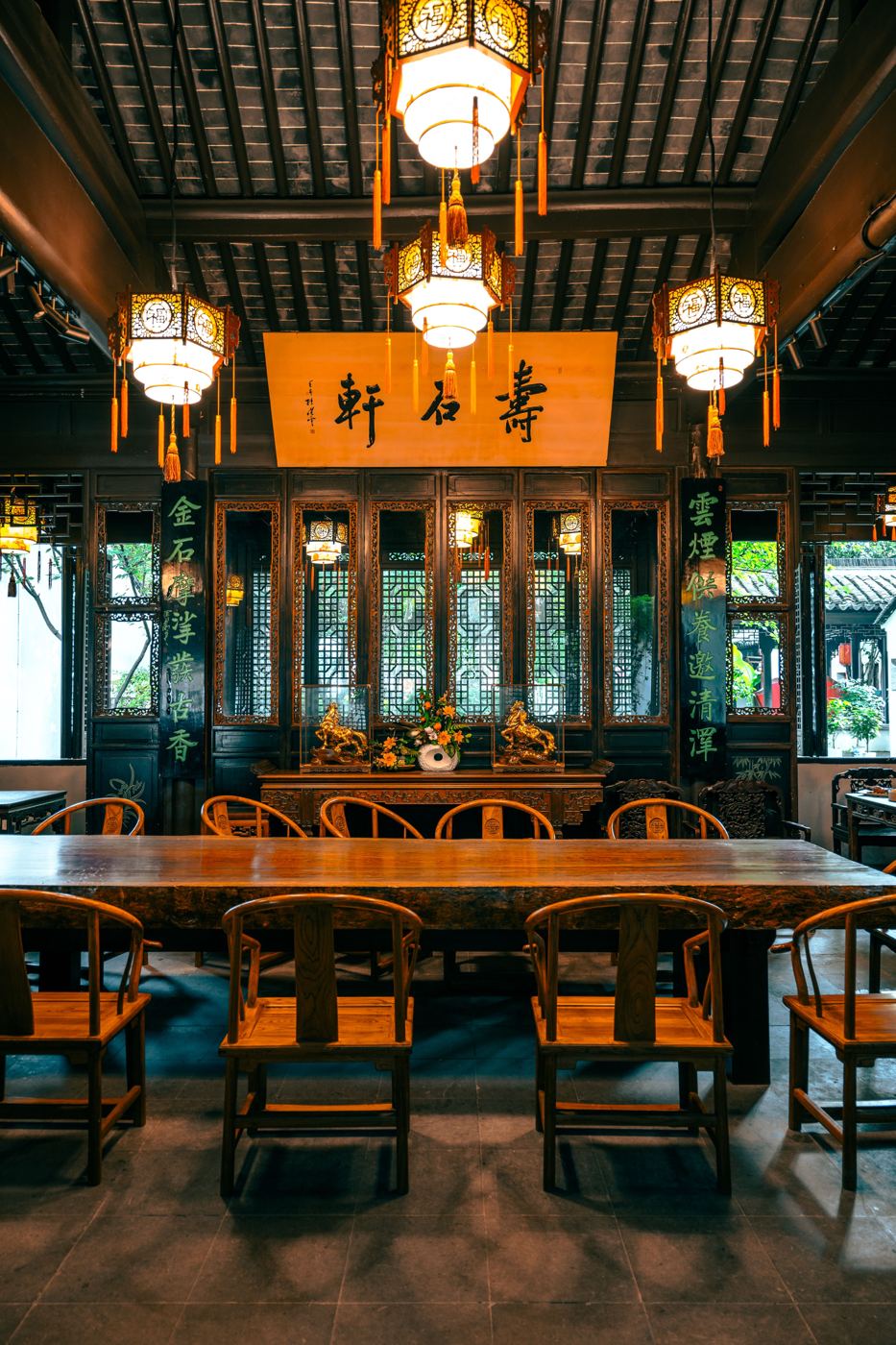
A tea house is a dedicated venue built around drinking tea together, not just a place that happens to sell it.
The form varies widely by culture. Chinese teahouses (chaguan) are often social hubs open all day, where regulars linger over gaiwan-steeped tea, play cards, or catch up on neighborhood news; some, especially in Sichuan, still hire performers or ear-cleaners as part of the experience. British tea rooms lean toward table service, china cups, and food built around the tea itself, from a simple pot-and-biscuit stop to a full afternoon tea spread. Japanese tea houses, or chaseki, are smaller and more deliberately built spaces meant for chanoyu, where the architecture itself, low doorways, tatami floors, a single alcove for a scroll or flower, is part of the ritual.
What separates a tea house from a tea ceremony is scope: a tea ceremony is a practice, a set of movements and intentions around preparing tea, while a tea house is the place, sometimes purpose-built, sometimes just a corner shop, where any number of ways of drinking tea can happen. A chaseki can host a chanoyu; a chaguan usually doesn’t stage anything so formal.