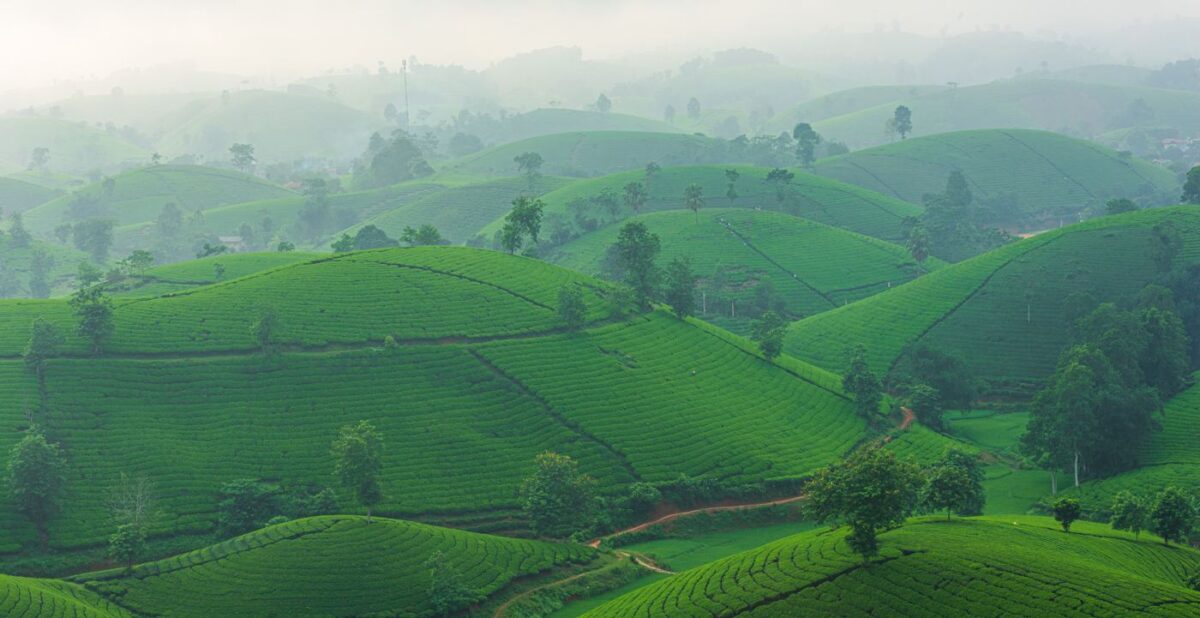
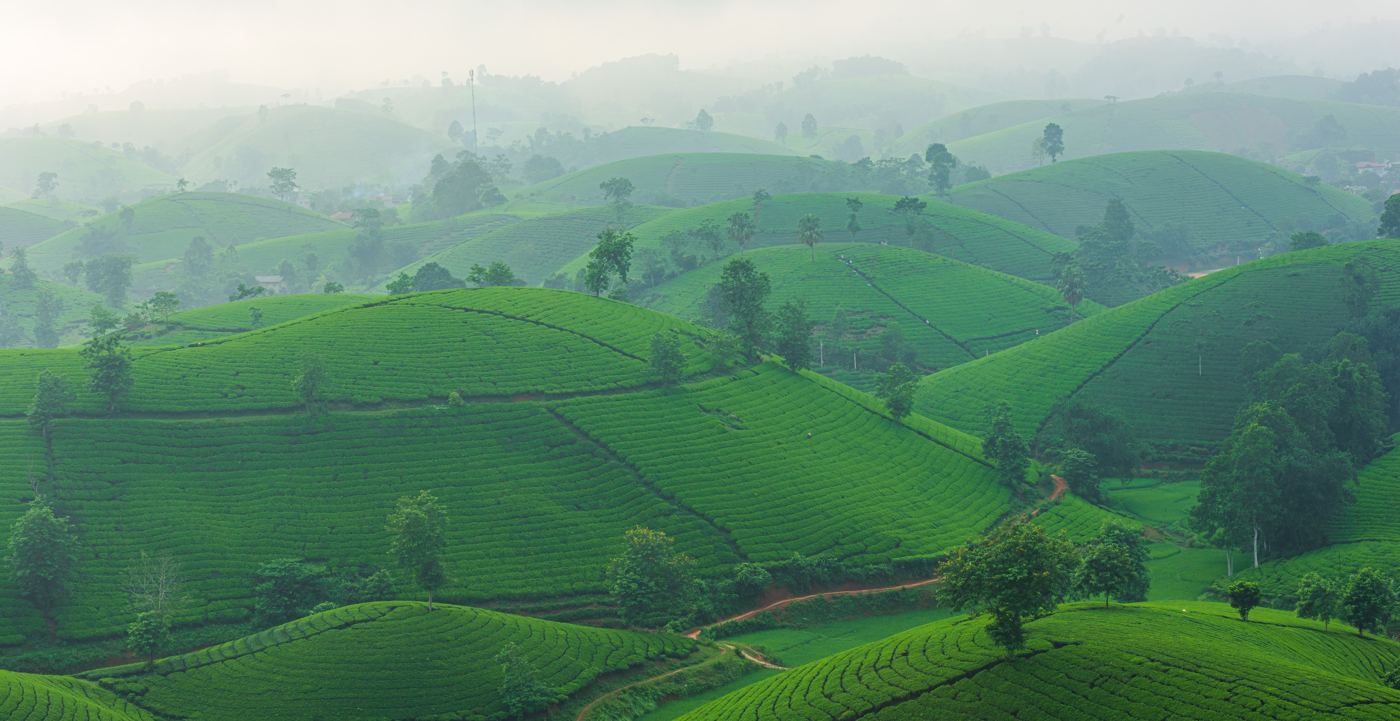
Terroir is everything about a specific place that ends up in the cup: the soil, the altitude, the climate, and how the plant is grown there, all of it shaping flavor before a single processing decision is made.
The same tea plant, Camellia sinensis, grown at high altitude in cool, misty conditions tends to develop differently than one grown at low elevation in full sun, quite apart from how it’s later oxidized or fired. High-elevation gardens often produce slower-growing leaf with more concentrated flavor compounds; mineral-rich or particularly acidic soil can push a tea toward its own distinct character entirely. None of this shows up on the package as a flavor note, exactly, but it’s the reason two black teas processed the same way can still taste noticeably different.
Why single-origin tea leans on it
Terroir is the whole reason a “single-origin” tea gets marketed by its specific place, the way wine does by vineyard, rather than just its category. A tea labeled simply “black tea” tells you the processing. A tea labeled “Darjeeling” or “Kumaon” is also telling you about a real, specific place, and the assumption is that place matters to how it tastes.
Our Kumaon Black and Kumaon, Let’s Go both draw on the same real Indian region for exactly this reason, single-origin leaf where the growing place is part of the point, not incidental to it.