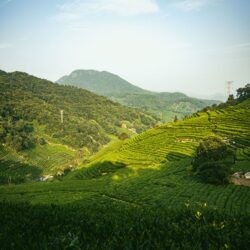
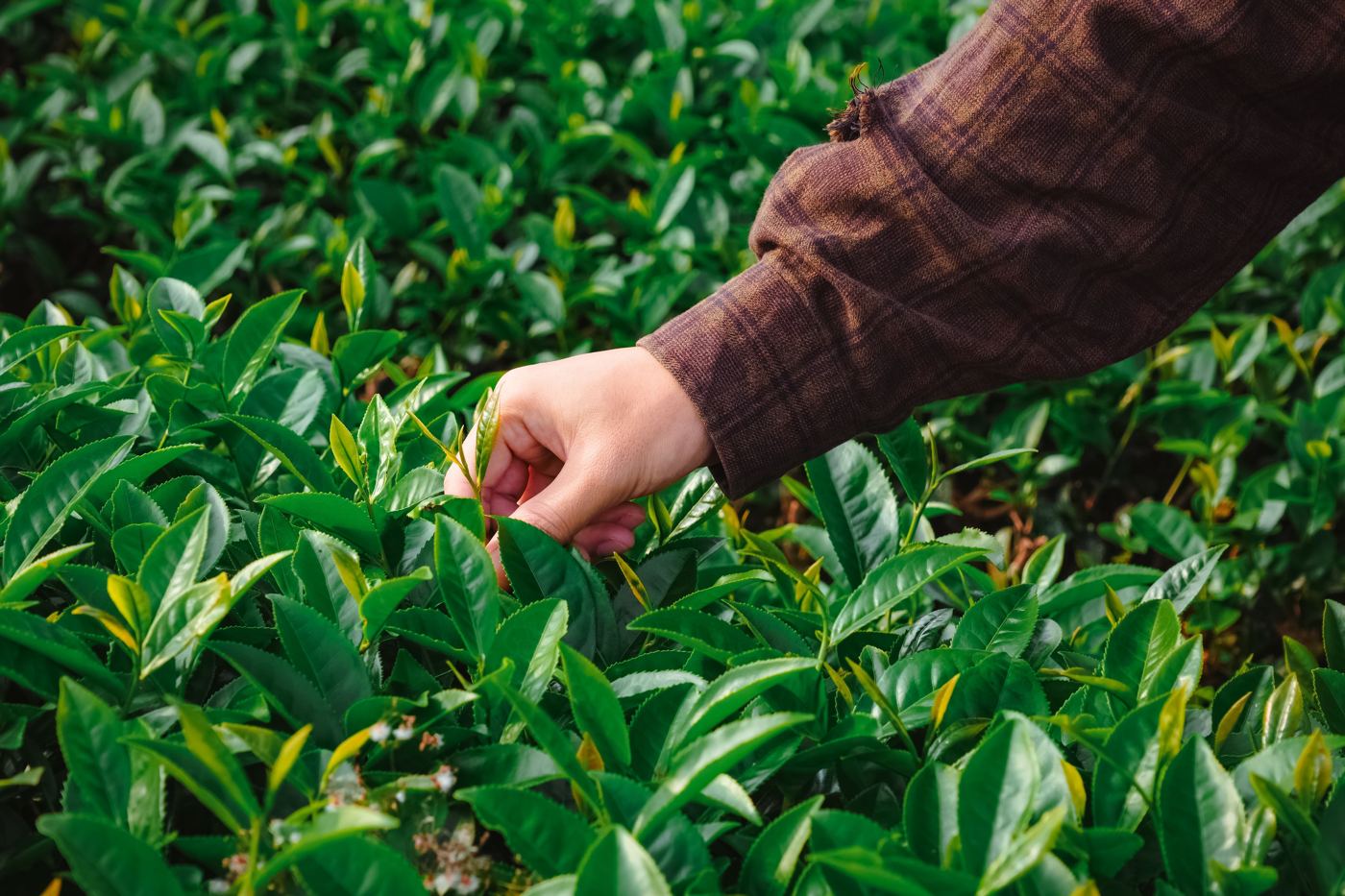
A varietal is a specific subspecies or cultivated variety of Camellia sinensis, and it sets a tea’s baseline character before growing conditions or processing ever get involved.
The two major varietals are Camellia sinensis var. sinensis, generally smaller-leafed, more cold-hardy, and traditionally associated with China and Japan, and Camellia sinensis var. assamica, larger-leafed, more heat-tolerant, and native to Assam in India. Assamica tends to produce bolder, more robust tea, which is part of why classic Assam and other big, malty black teas skew toward it, while sinensis leans into the more delicate end of the spectrum common in Chinese and Japanese green and white teas.
Not the same thing as terroir
Varietal and terroir get confused constantly, but they’re answering different questions. Varietal is genetics: which subspecies or cultivar the plant actually is. Terroir is environment: where that plant happened to grow. Two plants of the exact same varietal, grown in different regions, can taste quite different because of terroir; two different varietals grown side by side in the same field still won’t taste the same, because the genetic starting point itself is different.