Herbal tea isn’t tea at all, botanically speaking. It’s made from herbs, flowers, fruits, and spices instead of Camellia sinensis, the plant every “real” tea comes from, which is also why herbal tea is naturally caffeine-free rather than decaffeinated.
The technically correct name for this is a tisane, but almost nobody outside the tea industry uses that word, so “herbal tea” has become the common name for the whole category. Because there’s no single plant involved, herbal tea covers an enormous range: chamomile and lavender for something calming before bed, hibiscus and rooibos for tart or naturally sweet flavor, ginger and peppermint for something sharper. What ties the category together isn’t the plant, it’s the absence of one specific plant.
Built for a mood, not a caffeine hit
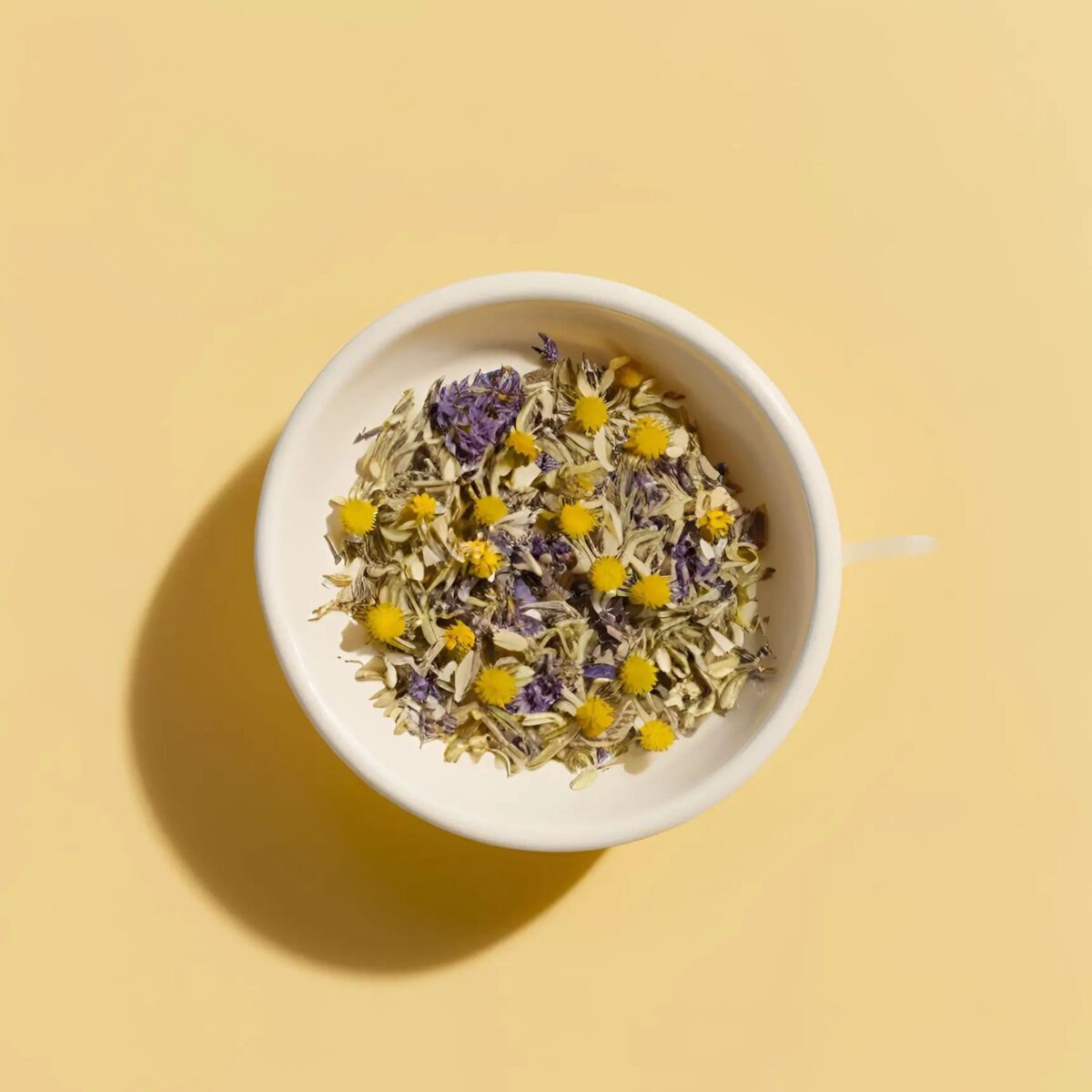
Because herbal blends skip caffeine entirely, they tend to get built around how they make you feel rather than how they wake you up. Chamomile Sunset leans into that directly, pairing chamomile with other calming botanicals for something meant for the end of the day. Transcendence, our color-changing butterfly pea flower blend, is a naturally caffeine-free example built around a partnership: a collaboration with performer Miss Peppermint that supports Advocates for Trans Equality. Red Moon Rooibos Chai shows the other direction herbal tea can go, taking the warm-spice chai format and rebuilding it on a caffeine-free rooibos base instead of black tea.
How to steep it
Herbal blends can generally take real heat, since there’s no delicate leaf tannin to scald the way there is with green or white tea. Chamomile Sunset uses a full 210–212°F for 4–6 minutes, close to a full boil. Red Moon Rooibos Chai runs slightly cooler at 200–210°F for 4–5 minutes, since rooibos holds up fine at high heat but the spice blend doesn’t need quite the same intensity as chamomile’s flowers and herbs. Either way, herbal tea is far more forgiving of a slightly-too-long steep than a real tea leaf is.