Herbal Tea / South African Origin

Photo: Eva Bronzini / Pexels
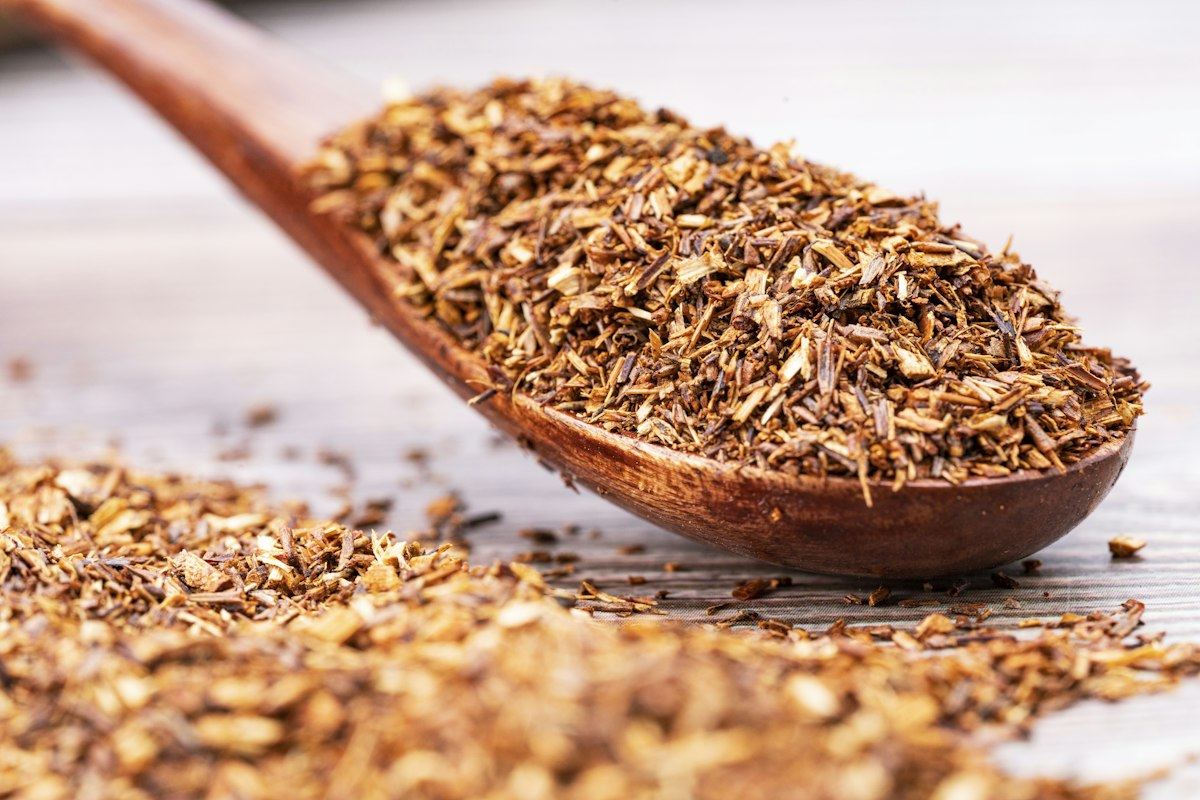
Rooibos, sometimes called “red tea,” isn’t tea at all in the botanical sense — it’s an herbal infusion made from the leaves of Aspalathus linearis, a shrub native to South Africa’s Cederberg region. Because it doesn’t come from the Camellia sinensis plant, rooibos is naturally caffeine-free.
The name “rooibos” is Afrikaans for “red bush,” describing the reddish-brown color the leaves take on during processing. Traditional rooibos is oxidized, similar in concept to how black tea is oxidized, which turns the naturally green leaves that deep red-brown and develops its characteristic sweet, slightly woody, honey-like flavor. An unoxidized version, called green rooibos, is also produced — lighter in color and flavor, closer to a grassy herbal tea.
Rooibos has been consumed by the Indigenous Khoi and San peoples of South Africa for generations and only entered wider commercial production in the early 20th century. Because the Cederberg region’s specific growing conditions are hard to replicate, most of the world’s rooibos still comes from South Africa.
Why It Matters
Rooibos is popular as a caffeine-free alternative to black or green tea, especially in the evening, and is traditionally credited with digestive and antioxidant benefits in South African folk use — claims that remain an active area of research rather than settled medical fact. It’s also naturally low in tannins, giving it a smoother, less bitter cup even when steeped a bit longer than usual.
How to Steep It
Rooibos can take a full boil, 200–212°F, and a longer steep, 5 to 7 minutes, without turning bitter, which makes it fairly forgiving to brew.
Naturally caffeine-free
Native to South Africa’s Cederberg region