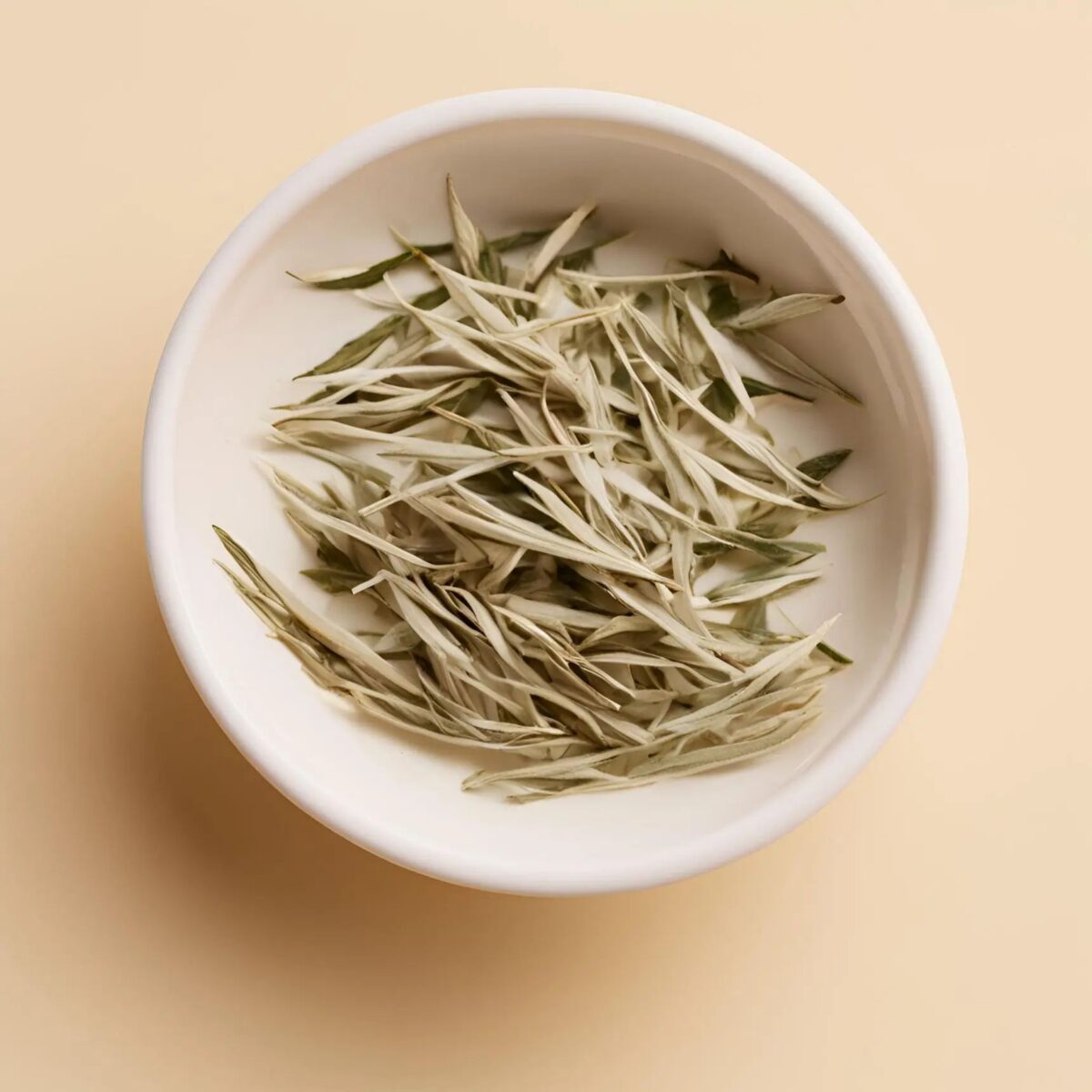

White tea is the least processed tea in the entire family. The youngest buds and leaves are simply withered and dried, no rolling, no firing, no forced oxidation, which is exactly why it stays so pale and so gentle.
Because the leaf isn’t bruised or rolled the way it is for other tea types, very little oxidation happens on its own before drying locks the leaf in place. That’s the entire reason white tea tastes the way it does: light body, subtle sweetness, and a soft floral or fruity character instead of the bolder, darker notes that come from more processing. It also means white tea keeps more of its natural antioxidants and generally runs on the lower end of the caffeine range.
Named for the down on the leaf, not the color of the cup
The classic reference point is Silver Needle (Bai Hao Yin Zhen), made entirely from unopened buds still covered in fine white down, which is where the category’s name actually comes from. White Peony (Bai Mu Dan) is a step down in delicacy, using slightly more open buds and young leaves, which gives it a bit more body while staying in the same gentle family. Both trace back to Fujian Province in China, where the category originated.
Our own White Peony blend takes its name directly from the classic variety above. If you want to taste what white tea does on its own terms, unblended and simple, it’s the most direct starting point in our White category.
How to steep it
White tea asks for the gentlest hand of any tea category. Use 1 teaspoon per 8 oz of water, heated to 180–185°F, well short of boiling, and steep for 2–4 minutes. Boiling water is the one thing to actually avoid here, since it can scald the delicate buds and flatten the floral character that makes white tea worth drinking in the first place. For iced tea, steep 2 teaspoons in 8 oz of hot water for the same 2–4 minutes and pour over ice; for cold brew, ½ ounce per 64 ounces of cold water, refrigerated 8–12 hours, tends to bring out even more of its natural sweetness.