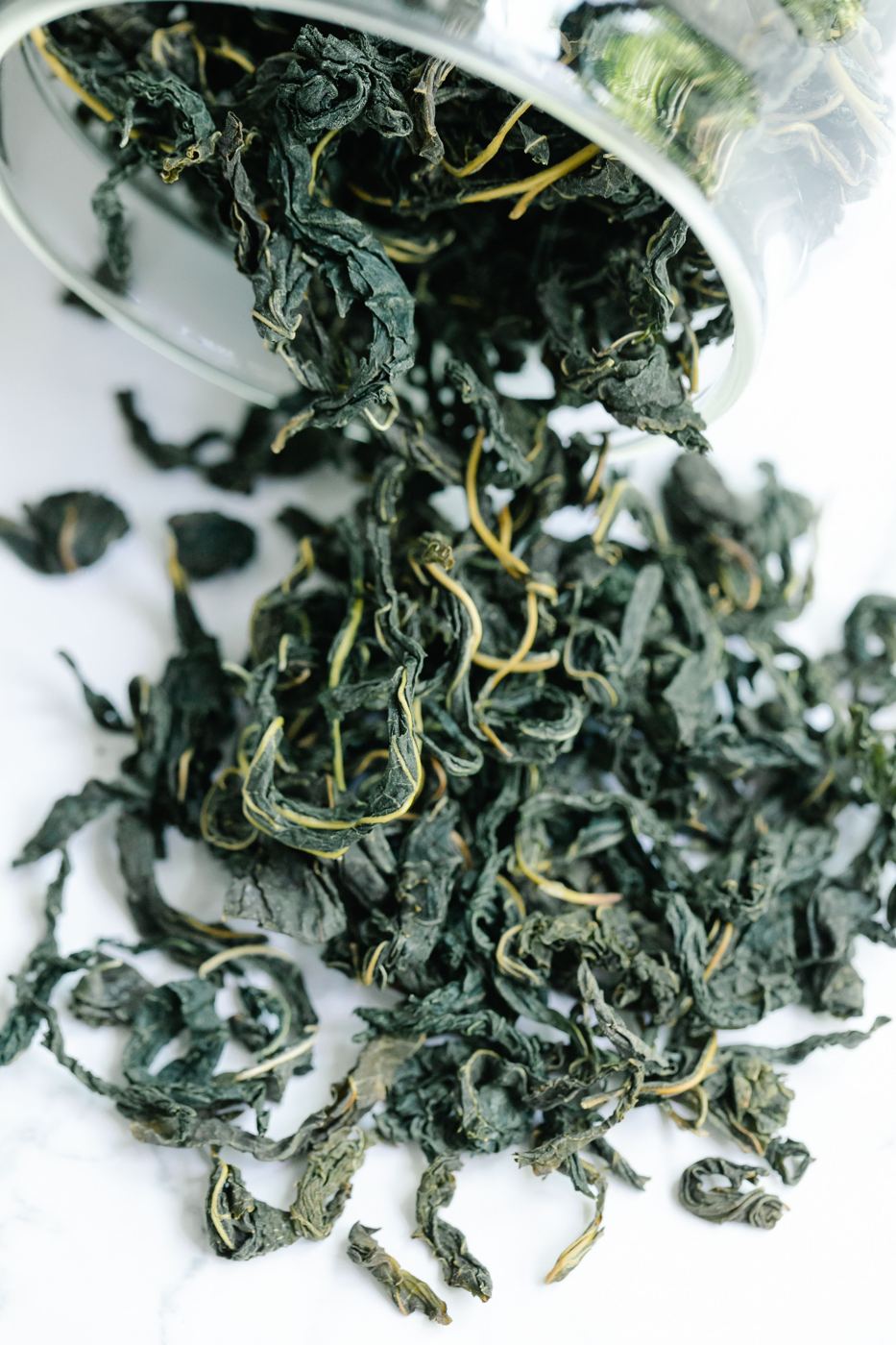
Gyokuro is Japan’s most prized leaf tea, shaded from direct sun for several weeks before harvest to build a deep, savory sweetness few green teas can match.
The shading process, usually under nets or straw canopies, cuts back photosynthesis, which pushes the plant to hold onto more chlorophyll and amino acids like L-theanine instead of converting them into the compounds that create a green tea’s typical astringency. The result is a tea that leans savory and full-bodied rather than grassy or sharp, with a smooth, almost broth-like sweetness that Japanese tea culture calls umami. Gyokuro is traditionally brewed at lower temperatures than most green teas and steeped longer to draw out that sweetness without tipping into bitterness. It sits just below Matcha in Japan’s premium tea hierarchy, and unlike Matcha, the whole leaf is steeped and left behind rather than whisked into the cup. L-theanine has been studied for its potential to support calm, focused alertness, though research is ongoing and it shouldn’t be read as a guaranteed effect.