Tie Guan Yin, also called Iron Goddess of Mercy, is one of China’s most celebrated oolongs, prized for its floral aroma and smooth, evolving flavor across multiple steepings.
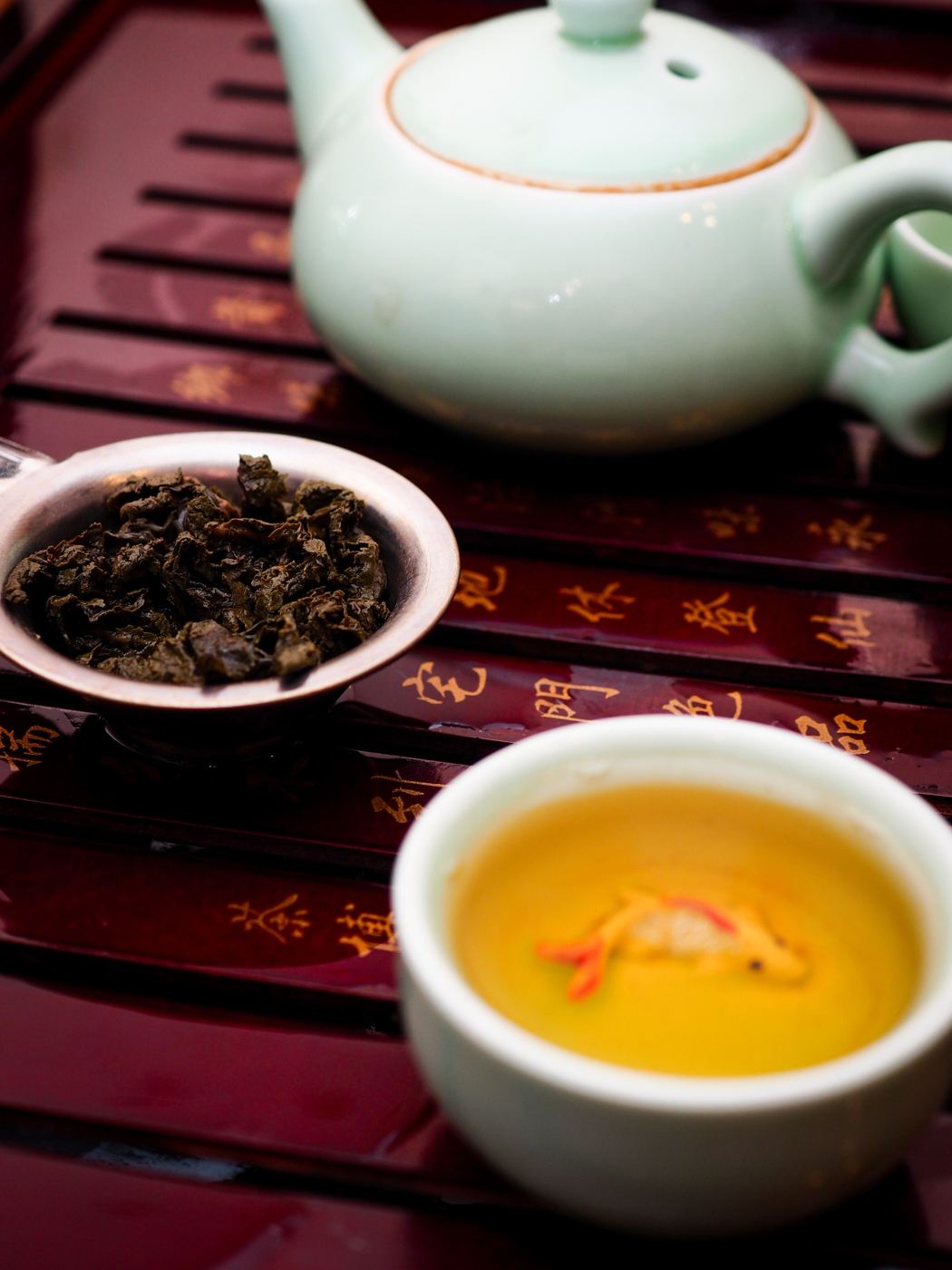
Grown mainly in the Anxi region of Fujian province, Tie Guan Yin is rolled into small, tightly curled balls that slowly unfurl as they’re steeped, releasing more flavor with each infusion, a brewing style closely tied to gongfu tea traditions. Oxidation levels vary widely by producer and style: lighter, more modern versions stay closer to green tea territory with a bright, orchid-like floral character, while traditional, more heavily oxidized versions develop a deeper, roasted, almost caramelized profile. Both styles share a buttery texture and a lingering sweet finish that Chinese tea culture calls “yun,” or aftertaste. The name comes from a folk legend about a poor farmer rewarded for his devotion to a Guanyin (Goddess of Mercy) statue with a tea plant that grew into this variety. Because the leaves hold up to repeated steeping, Tie Guan Yin is often enjoyed slowly over several short infusions rather than one long steep.