
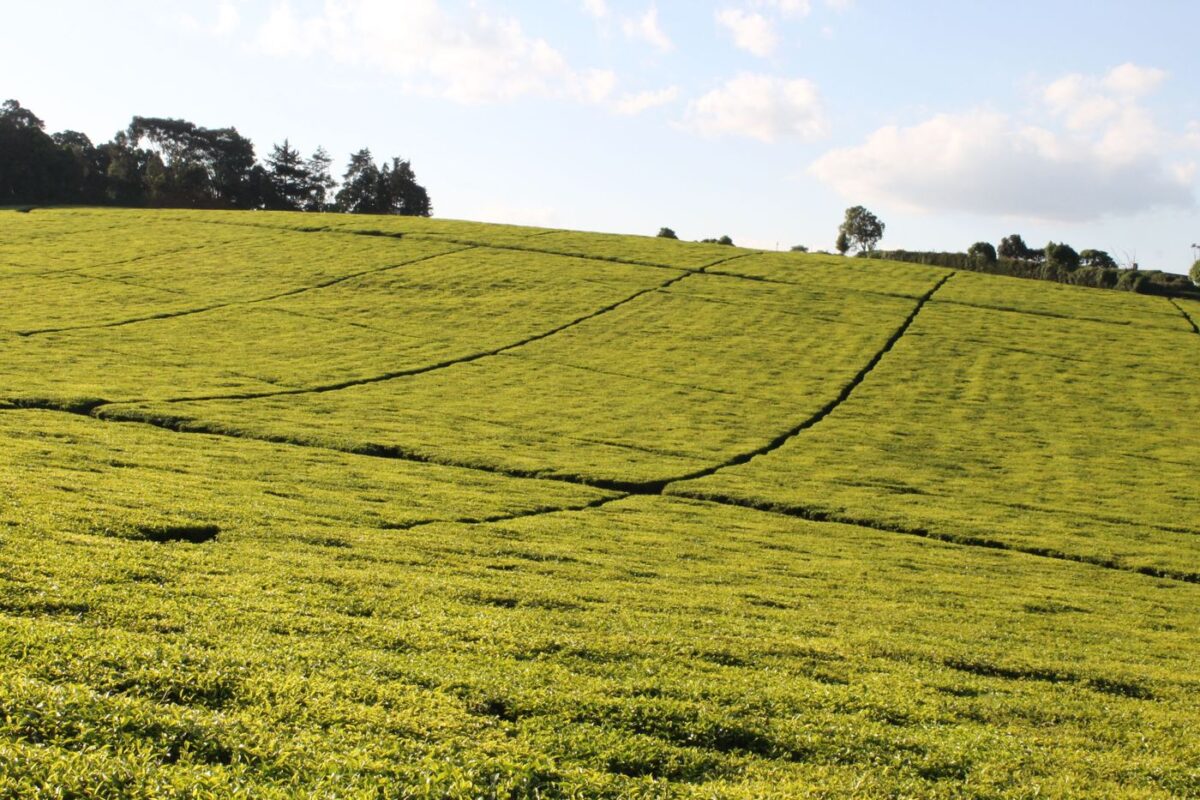
Tea Growing Region
Photo: Melvin Muhande / Pexels
Africa’s tea industry is much younger than Asia’s, but it’s massive: Kenya alone ranks among the world’s top exporters of black tea, alongside significant production in Malawi, Tanzania, Rwanda, and Uganda.
Tea reached East Africa in the early 1900s, planted by British colonists on the same high-altitude land that was already proving good for coffee. Kenya’s tea belt sits roughly 6,000 to 9,000 feet up in the central highlands near Mount Kenya and the Great Rift Valley, where cool nights, steady rainfall, and rich volcanic soil let the plant grow almost year-round instead of pausing for a single seasonal flush the way many Asian tea regions do. That near-constant growing season is a big part of why the region can harvest so often and produce at such volume.
Most of that volume is a fast-growing black tea processed by the CTC method (crush, tear, curl), which chops the leaf into small, uniform pieces built for strength, quick brewing, and consistency rather than delicate, single-flush character. It’s also grown differently than the big colonial-era estates still common in India and Sri Lanka — a large share of Kenyan tea comes from smallholder farmers who sell their leaf to shared cooperative factories rather than working one large plantation.
Not just black tea
South Africa contributes a completely different plant to the continent’s tea story: rooibos, a naturally caffeine-free herbal tisane made from Aspalathus linearis, a shrub native to the Western Cape’s Cederberg region. Rooibos isn’t Camellia sinensis at all, so unlike Kenyan black tea, it’s classified as an herbal infusion rather than a true tea.
Most East African tea is CTC-processed
Rooibos comes from South Africa, not Camellia sinensis