Scented Tea
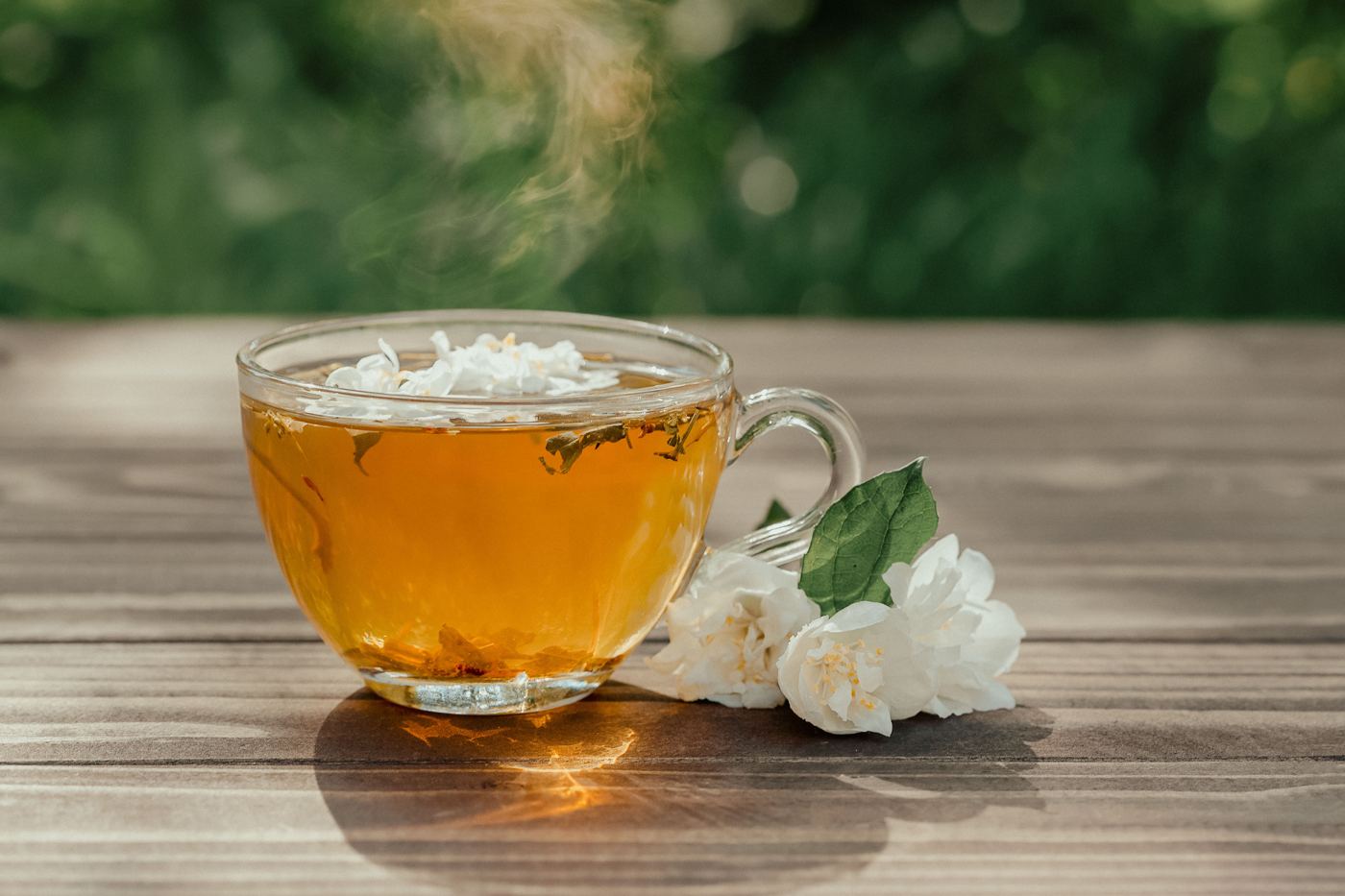
Photo: Ihor Filirovskyi / Pexels
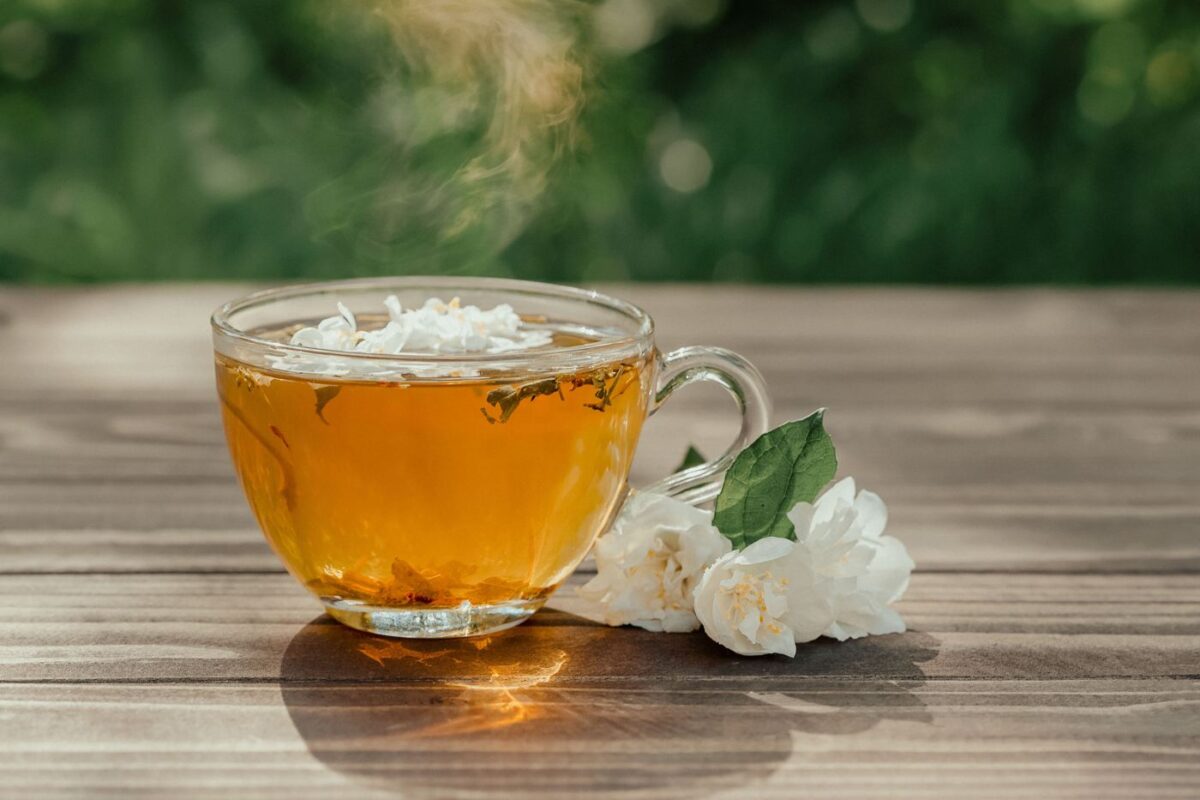
Jasmine tea is tea, most often green tea, scented by repeated contact with fresh jasmine blossoms. The flowers themselves are usually removed before the finished tea is packaged — what’s left is the tea’s own leaf, carrying the flower’s fragrance rather than actual petals.
The process is meticulous. Fresh jasmine blossoms open their fragrance only at night, so traditional scenting is done after dark: tea leaves are layered with just-opened flowers and left to absorb the scent for hours, then the spent flowers are sifted out. Higher-grade jasmine teas repeat this cycle multiple times over several nights, which is part of why good jasmine tea costs noticeably more than a tea simply sprayed with jasmine flavoring.
The technique dates back centuries in China, with Fuzhou in Fujian province historically recognized as a center of jasmine tea production, though the practice has since spread to Taiwan and other tea-growing regions.
How to Steep It
Because most jasmine tea uses a green tea base, it’s best steeped gently — water around 175–185°F, not a full boil, for 2 to 3 minutes. Hotter water or a longer steep can scorch the green tea leaf and mute the floral scent that’s the whole point of the blend. Jasmine tea is naturally caffeinated at typical green tea levels, generally lighter than black tea, and is traditionally enjoyed plain rather than with milk or sugar so the aroma comes through clearly.
Scented, not steeped with, real jasmine
Steep 2–3 min at 175–185°F