Purple tea comes from a purple-leafed cultivar of Camellia sinensis, grown mainly in the Kenyan highlands and one of the newer additions to the tea world rather than an old regional tradition.
The cultivar, developed by Kenya’s Tea Research Institute and released commercially in the early 2010s, was bred to give Kenyan growers an alternative to the black CTC tea the country is best known for. Its leaves owe their violet color to a high concentration of anthocyanins, the same class of plant pigments found in blueberries and red cabbage. Anthocyanins are being studied for potential antioxidant properties, though that research is still developing and shouldn’t be read as a settled health claim.
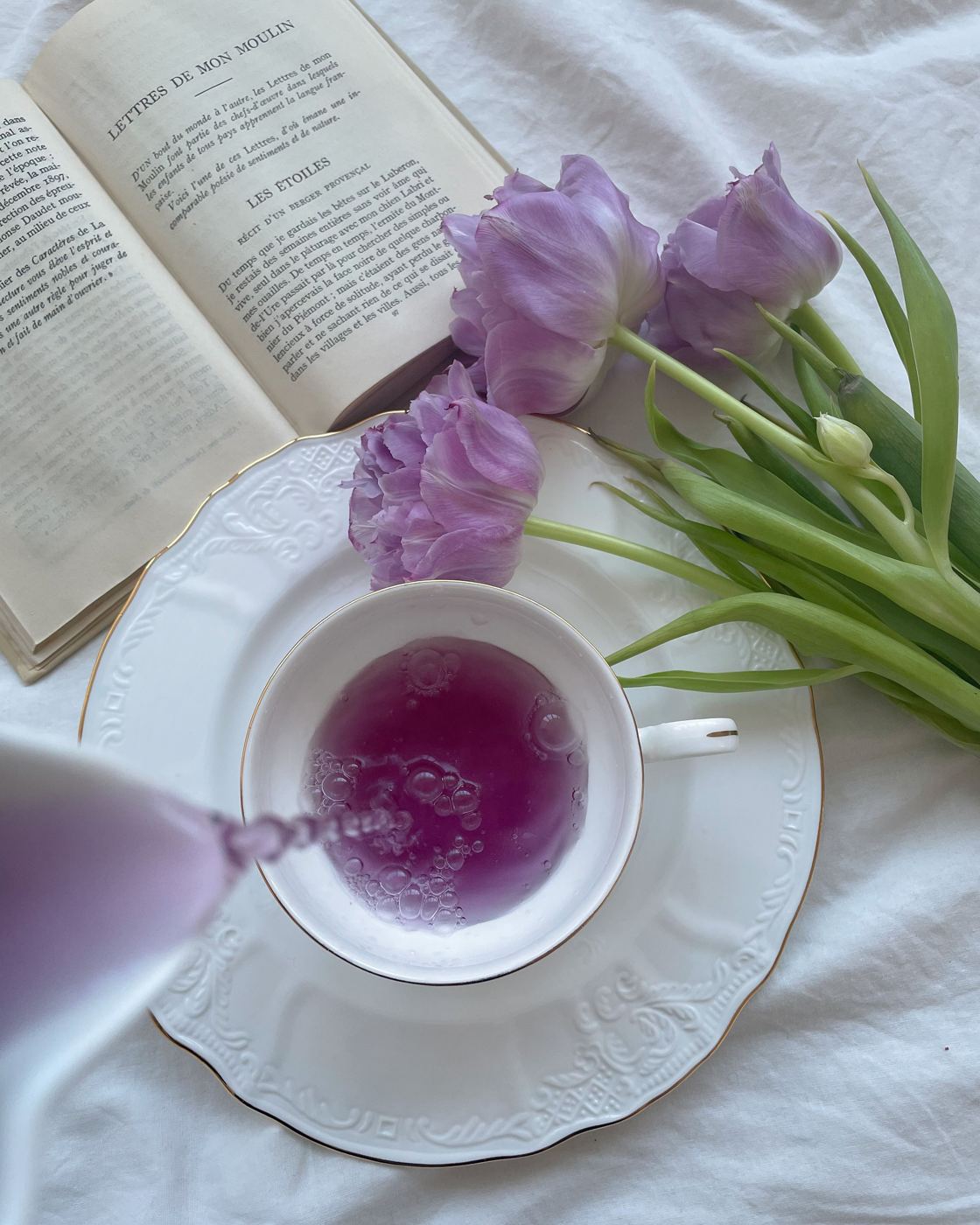
Because purple tea is usually processed with minimal oxidation, closer to a green or white tea than a black one, much of that pigment carries through into the cup, giving a light reddish-violet liquor with a smooth, faintly tart flavor and less astringency than a typical Kenyan black tea.