“Red tea” is one of the more genuinely confusing names in tea, because it means two completely different things depending on where you’re standing.
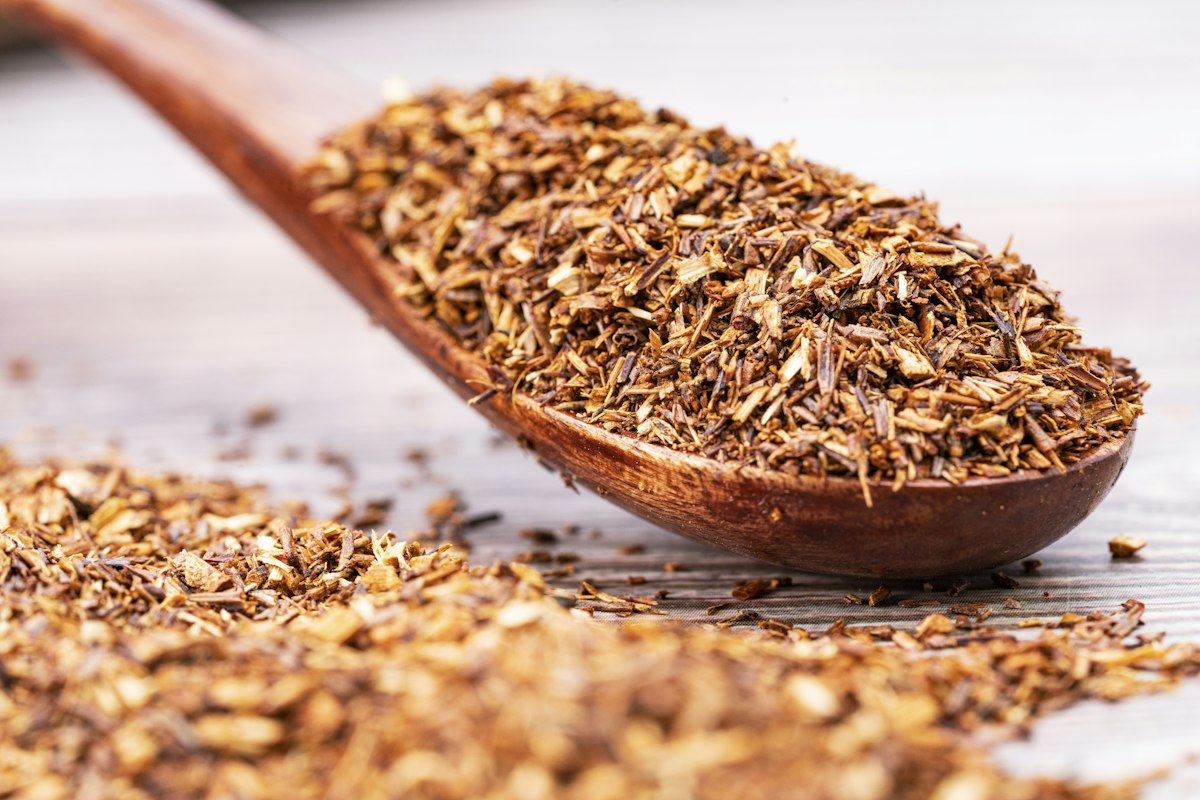
In China, hóng chá (红茶), literally “red tea,” is the name for what English speakers call black tea: fully oxidized leaf from Camellia sinensis. The name comes from the reddish color of the brewed liquor, not the leaf itself, which is why the same tea gets two different color names in two different languages. In the West, “red tea” almost always means something else entirely: rooibos, a naturally caffeine-free South African plant that isn’t tea at all in the botanical sense.
Two teas, two very different profiles
Chinese red tea (Western black tea) carries the complex, malty depth typical of full oxidation. Rooibos, by contrast, comes from a completely different plant native to South Africa’s Cederberg region, and its naturally sweet, mild, slightly earthy flavor has nothing to do with oxidation at all, since it isn’t processed the way Camellia sinensis is. The overlap in name is a coincidence of translation, not a shared origin.
Our Red Moon Rooibos Chai uses the Western meaning: a caffeine-free rooibos base built into the chai format, for anyone who wants the warm-spice flavor without the caffeine a black tea base would bring.
How to steep it
The two meanings steep almost identically, just for different reasons. Chinese red tea, being fully oxidized black tea, generally wants close-to-boiling water and a shorter steep, similar to any other black tea. Rooibos also takes a full boil well, closer to 200–210°F for 4–5 minutes, but for the opposite reason: it has no real tannin to turn bitter, so it’s genuinely hard to oversteep. Our own Red Moon Rooibos Chai, built on that rooibos base, follows exactly that pattern.