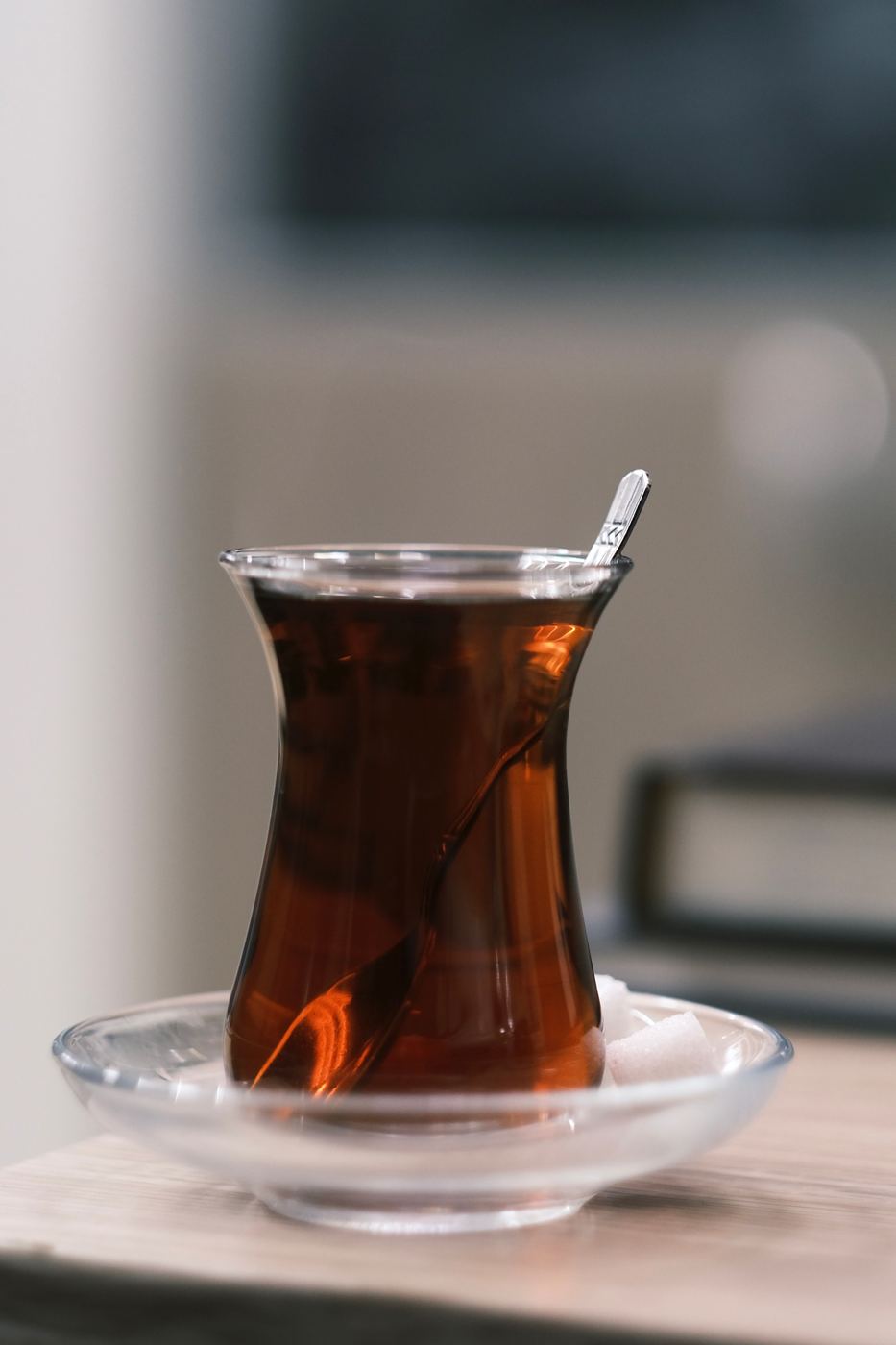
Tannins are the natural compounds behind a tea’s astringency, that dry, slightly puckering feeling on the tongue and cheeks after a strong sip, most familiar from an oversteeped black tea.
Tannins build up as a leaf oxidizes, which is why they’re most prominent in black tea and darker oolongs, and much lighter in minimally oxidized green and white teas. They’re a real, structural part of black tea’s character, not a flaw, giving it the body and grip that makes it hold up well against milk. The problem only shows up when a tea sits in hot water too long: tannins keep extracting the longer the leaf steeps, which is the actual mechanism behind a “bitter, oversteeped” cup, not something mysterious about the tea going bad.
Astringency, not bitterness
Tannins and bitterness get blamed on each other constantly, but they’re technically different sensations: astringency is the drying, tightening feeling; bitterness is a taste. A heavily tannic tea often reads as “bitter” to most drinkers because the two sensations show up together so often, but a tea can genuinely be astringent without being bitter, and the fix for both is usually the same: less time in the water, not a different tea entirely.