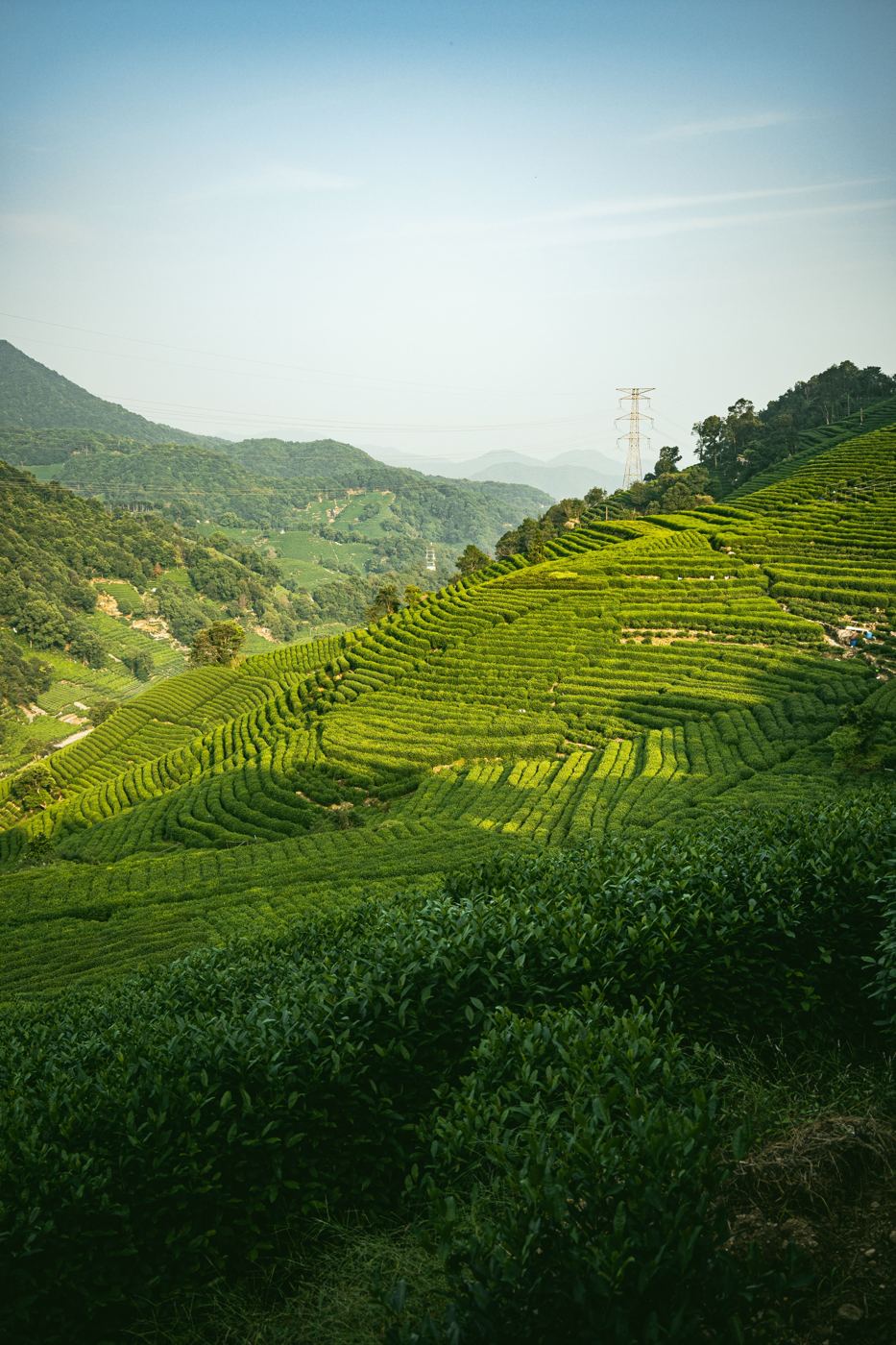
Yunnan is a mountainous province in southwest China, and one of the birthplaces of tea itself, home to some of the oldest wild tea trees on record and the source of two of China’s best-known exports: pu-erh and Yunnan black tea.
What makes Yunnan distinct from other Chinese tea regions is its varietal. Most Chinese tea comes from the small-leaf form of Camellia sinensis, but Yunnan’s high-altitude forests grow the broad-leafed varietal assamica, the same wide-leaf plant found in Assam, India. Processed differently, that large leaf becomes very different teas: left to ferment and age, it’s pu-erh; withered, rolled, and fully oxidized, it’s Dianhong, a golden-tipped black tea known for a naturally sweet, honeyed character that needs no added flavoring.
Yunnan’s elevation, misty microclimates, and centuries-old tea gardens (some trees are said to be hundreds of years old) all shape that flavor, giving Yunnan teas a depth and earthiness that’s hard to replicate outside the province.